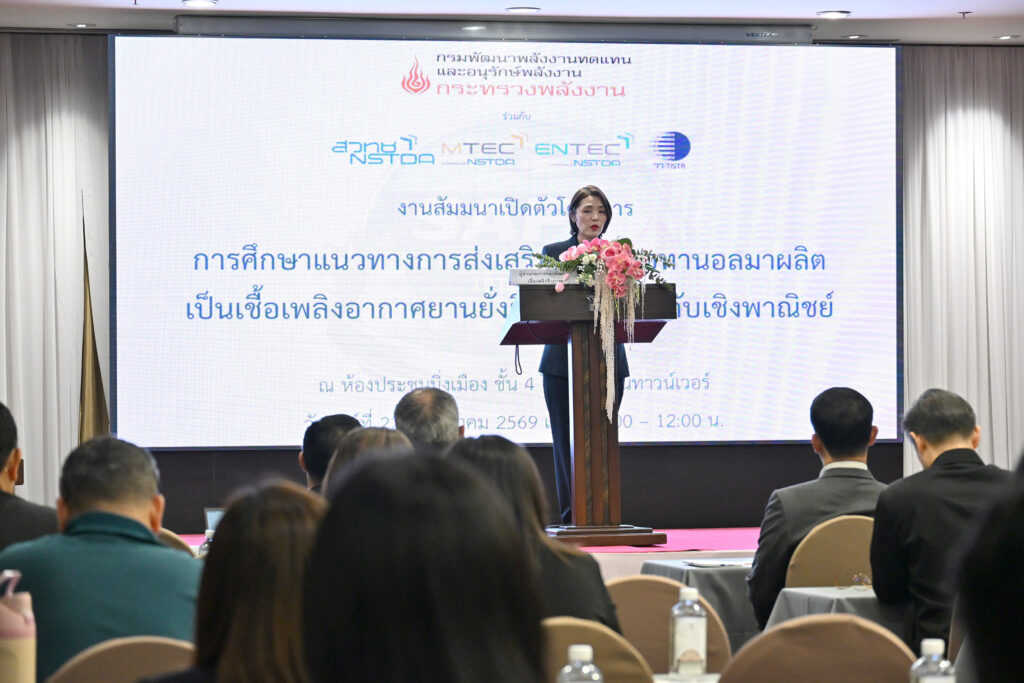
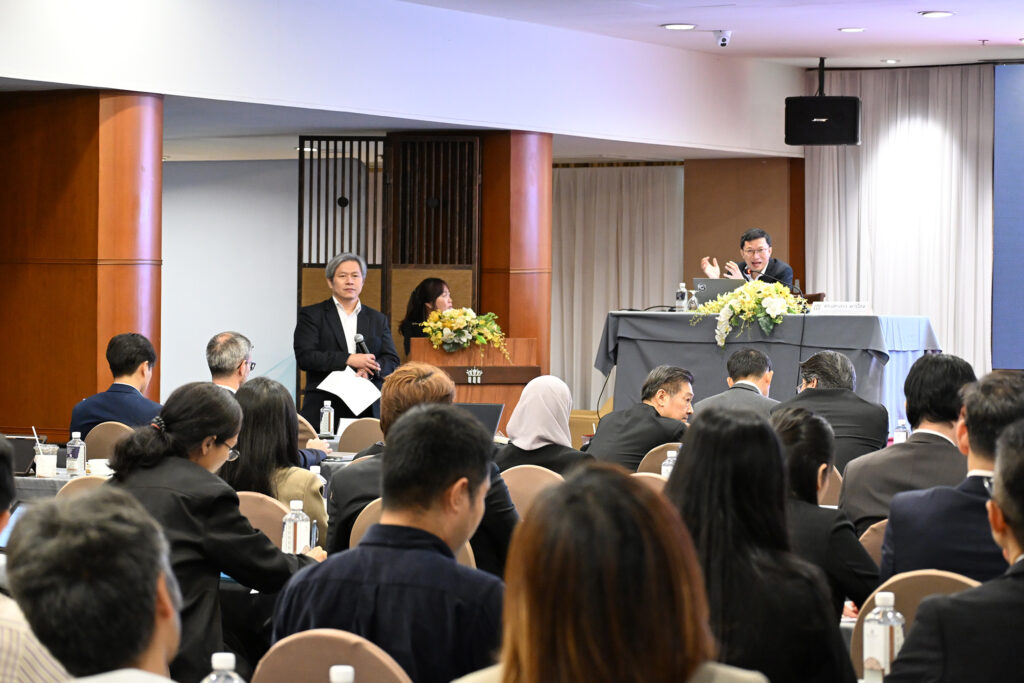
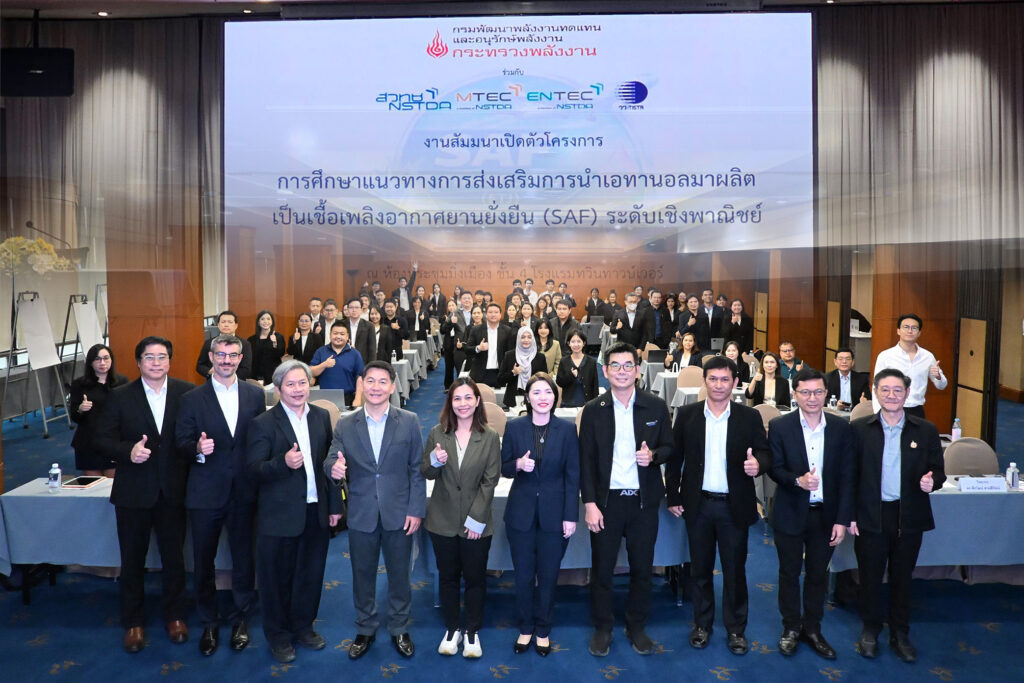
On 22 May 2026, at Ming Muang Meeting Room, 4th Floor, The Twin Towers Hotel, Bangkok
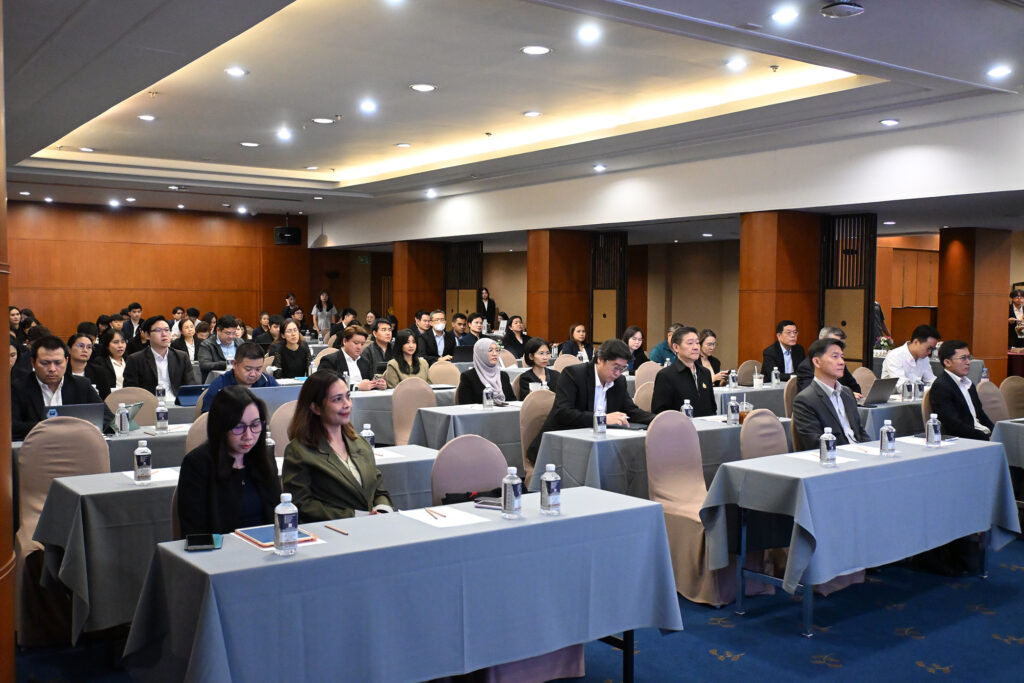
National Energy Technology Center (ENTEC) and National Metal and Materials Technology Center (MTEC) under National Science and Technology Development Agency (NSTDA), together with Thailand Institute of Scientific and Technological Research (TISTR) and Department of Alternative Energy Development and Efficiency (DEDE), jointly organized the launch seminar for the “Study to Advance Ethanol-to-Jet Fuel Pathways for Commercial Sustainable Aviation Fuel (SAF) Development in Thailand” project.
The project aims to disseminate Thailand’s direction for developing the sustainable aviation fuel industry by exploring the potential of utilizing domestically produced ethanol — one of the country’s key bio-based feedstocks — for SAF production through the Alcohol-to-Jet (ATJ) pathway. The initiative supports the global aviation sector’s transition toward greenhouse gas reduction and Net Zero targets.
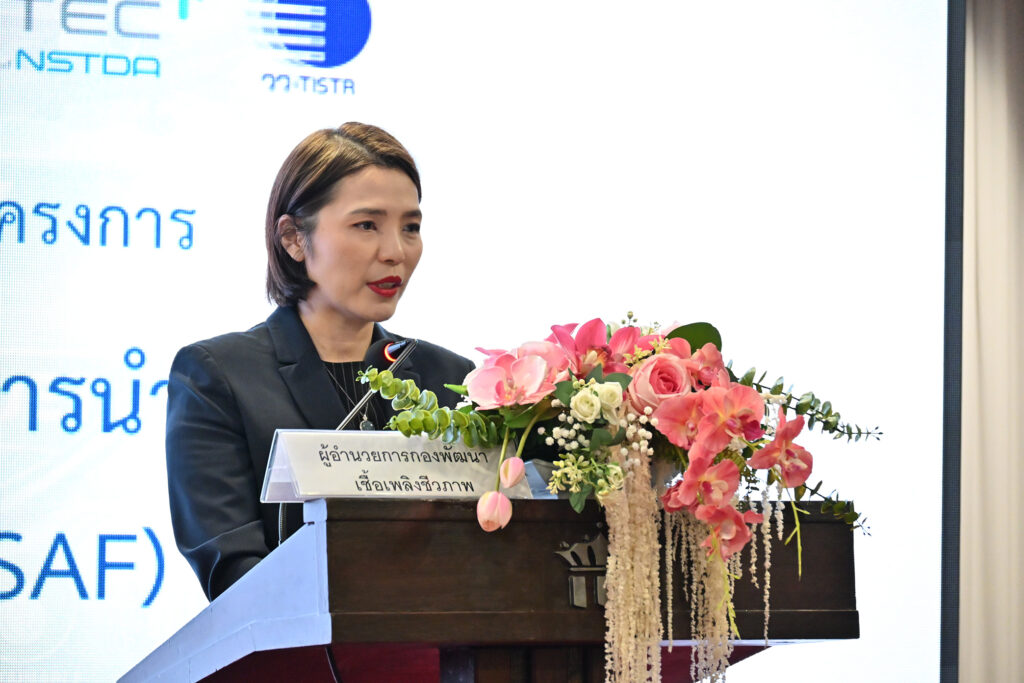
Dr. Apiradee Thammanomai, Director of the Bureau of Biofuel Development at DEDE, stated that the world is facing increasing challenges from climate change, prompting many countries to accelerate greenhouse gas reduction measures, particularly in the aviation sector, which continues to grow while facing limitations in decarbonization. The development of Sustainable Aviation Fuel (SAF) has therefore become an important part of Thailand’s National Energy Plan with the aim of promoting the utilization of domestically produced ethanol for SAF production through Ethanol-to-Jet (EtJ) technology.
She highlighted that Thailand has strong ethanol production capabilities, with a combined production capacity of over 7 million liters per day, using domestic feedstocks such as sugarcane and cassava. This creates significant opportunities to further develop the SAF industry to support the growing demand of the aviation sector, while reducing reliance on imported crude oil and supporting Thailand’s greenhouse gas reduction commitments.
Dr. Apiradee further explained that the project covers comprehensive studies on SAF production technologies, Life Cycle Assessment (LCA), environmental impacts, economic feasibility, investment requirements, supply chain analysis, and the development of policy recommendations and supporting measures. The study is expected to serve as a key foundation for advancing Thailand’s SAF industry and strengthening the country’s position as a future regional aviation hub.
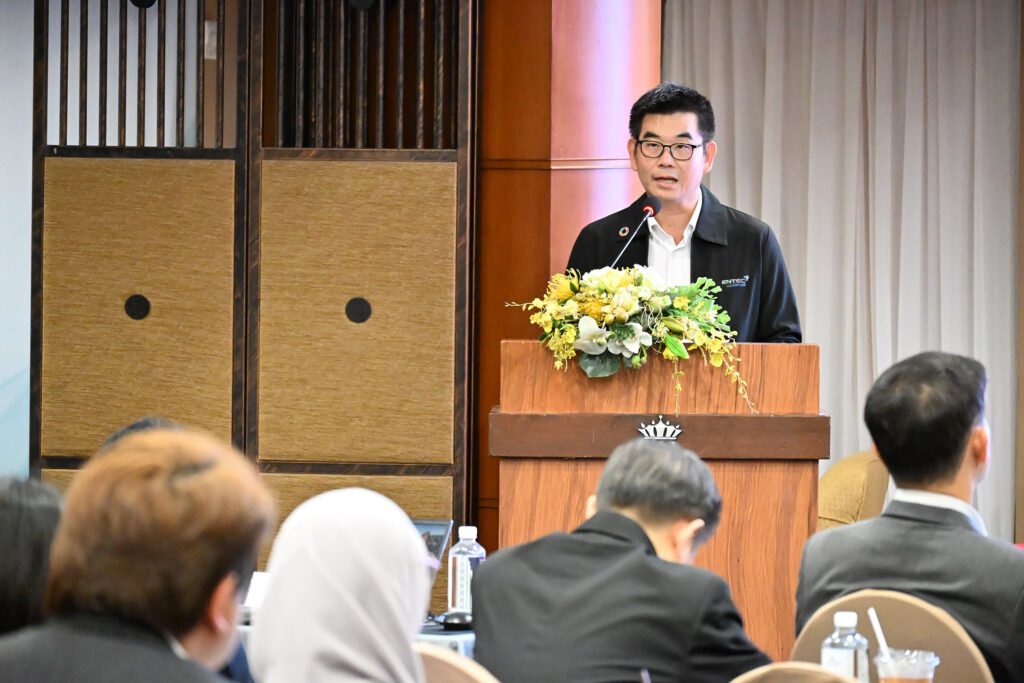
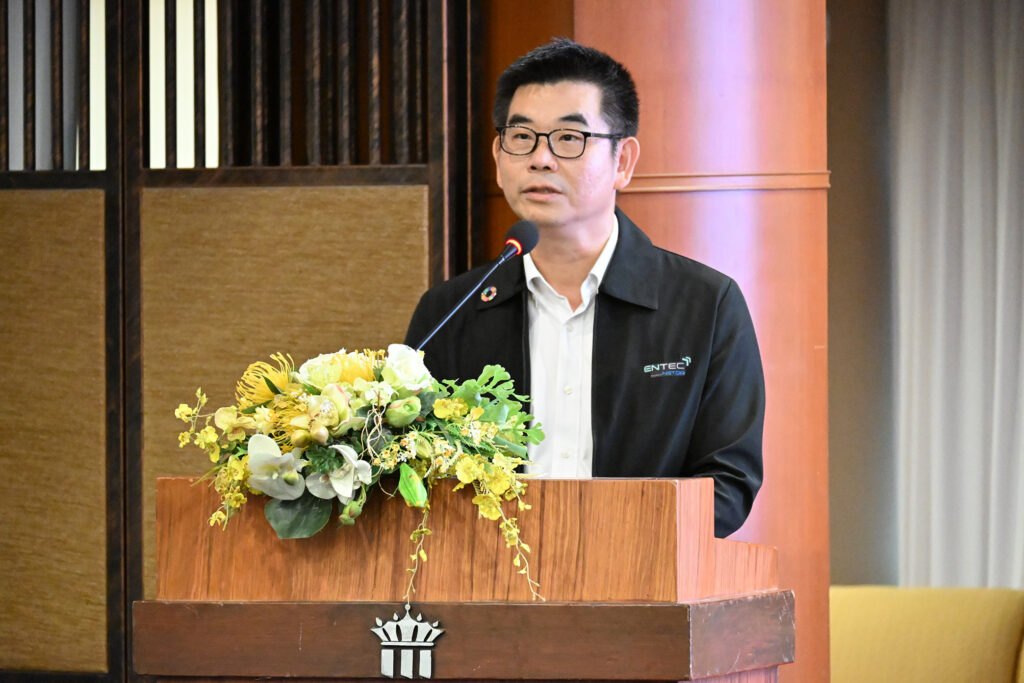
Dr. Nuwong Chollacoop, Acting Deputy Executive Director of National Energy Technology Center (ENTEC), stated that Thailand possesses strong potential in biofuels, particularly in its well-established ethanol supply chain, which currently has surplus production capacity. This presents an important opportunity to expand into SAF production to meet future aviation demand.
However, he noted that the International Civil Aviation Organization’s Carbon Offsetting and Reduction Scheme for International Aviation (ICAO-CORSIA) includes requirements regarding feedstocks and production pathways that may not fully align with Thailand’s context. Therefore, the project aims to integrate ICAO-CORSIA frameworks with Thailand’s ethanol industry potential to support the practical implementation of SAF production via the Ethanol-to-Jet (EtJ) pathway at a commercial scale.
“The project will assess environmental impacts across the entire value chain — from upstream feedstock cultivation and ethanol production to transportation, SAF conversion processes, and downstream utilization — alongside economic and policy analyses to provide evidence-based recommendations for national direction,” Dr. Nuwong said.
Dr. Nuwong added that the project also places strong emphasis on gathering input and feedback from all relevant stakeholders, including ethanol producers, aviation fuel manufacturers, the aviation sector, infrastructure providers, and regulatory agencies. This collaborative approach aims to ensure that the promotion of SAF through the Ethanol-to-Jet (EtJ) pathway can be practically implemented and effectively support Thailand’s ambition to become a regional hub for sustainable aviation fuel production in the future.
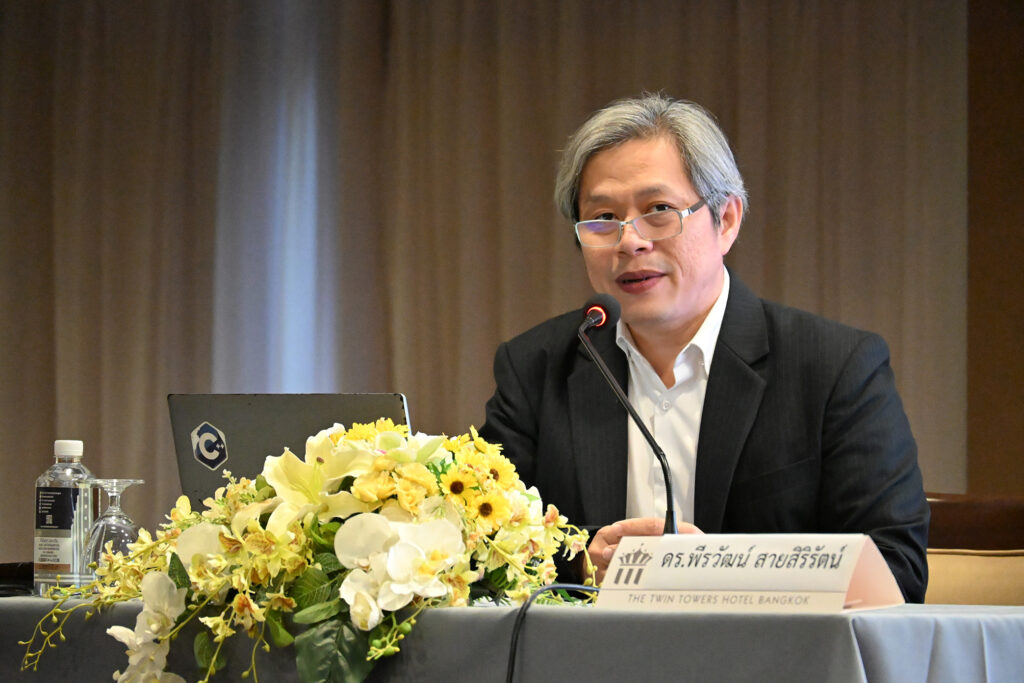
The seminar also featured presentations on the project’s background and current progress in promoting SAF EtJ technologies. Dr. Peerawat Saisirirat, Leader of the Renewable Energy and Energy Efficiency Research Team under the Low Carbon Energy Research Group at ENTEC, explained that the project aims to promote the use of domestically produced ethanol as a clean energy source supporting the aviation industry’s global Net Zero ambitions under the ICAO-CORSIA framework.
Under ICAO-CORSIA, SAF is expected to contribute up to 65% of greenhouse gas emission reductions in the aviation sector by 2050. The project therefore covers studies on Alcohol-to-Jet (EtJ) technologies, Life Cycle Assessment (LCA), environmental impacts, economic feasibility, investment analysis, relevant regulations, and support mechanisms to develop policy recommendations suited to Thailand’s context.
Thailand’s strong feedstock potential from molasses and cassava, combined with current ethanol production capacity exceeding 7.03 million liters per day, is expected to support significant expansion of SAF production during 2030–2032 as the country advances its long-term decarbonization goals.
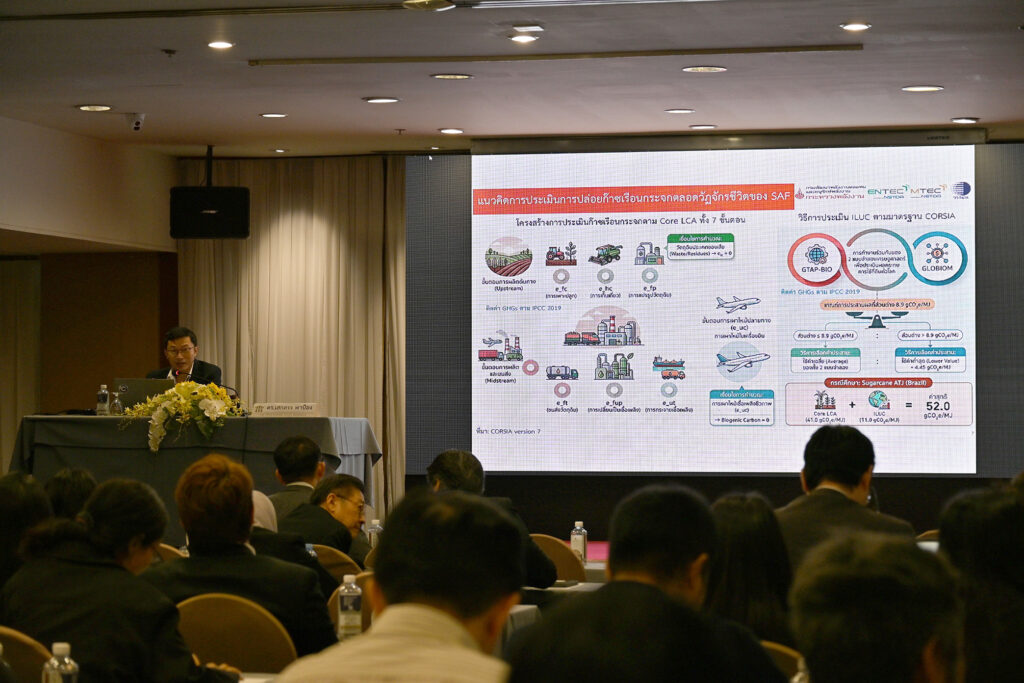
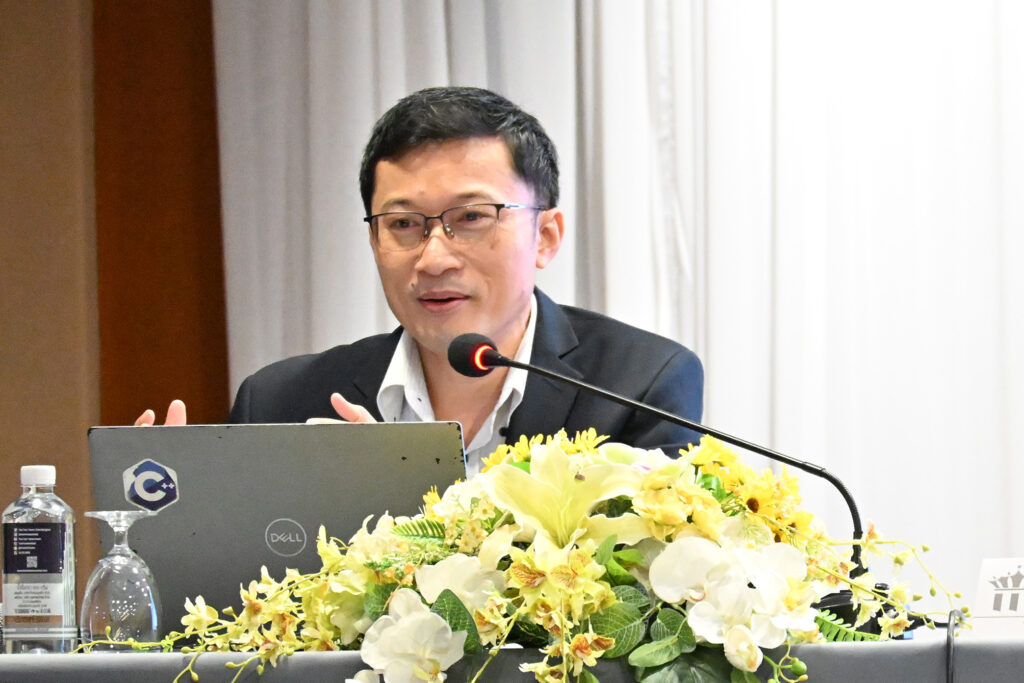
In addition, Dr. Seksan Papong, Leader of the Sustainability and Socio-economic Assessment Research Team at the Technology and Informatics Institute for Sustainability (TIIS), MTEC, presented the conceptual framework and methodology for Life Cycle Assessment (LCA) of sustainable aviation fuel. He explained that Thailand is studying SAF development in accordance with ICAO standards, assessing greenhouse gas emissions throughout the supply chain — from agricultural feedstocks to aviation use.
The assessment under the CORSIA mechanism also considers Indirect Land Use Change (ILUC) and soil carbon accumulation to ensure transparent and internationally recognized calculations. Thailand is currently studying SAF production potential from ethanol derived from sugarcane, molasses, and cassava, with participation from 13 ethanol production facilities. Preliminary findings indicate that SAF capable of reducing greenhouse gas emissions by more than 10% compared to conventional fossil fuels could become a significant driver in advancing the aviation industry toward long-term sustainability and decarbonization goals.
The project marks another important milestone in Thailand’s efforts to drive the aviation industry toward Net Zero emissions and green economic development through integrated collaboration among science, technology, energy, and industrial sectors. By enhancing the value of Thailand’s bio-based resources and laying the groundwork for commercial-scale SAF production from ethanol, the initiative is expected to support the country’s transition toward clean energy while strengthening Thailand’s future role as a regional hub for sustainable aviation and clean energy development.