
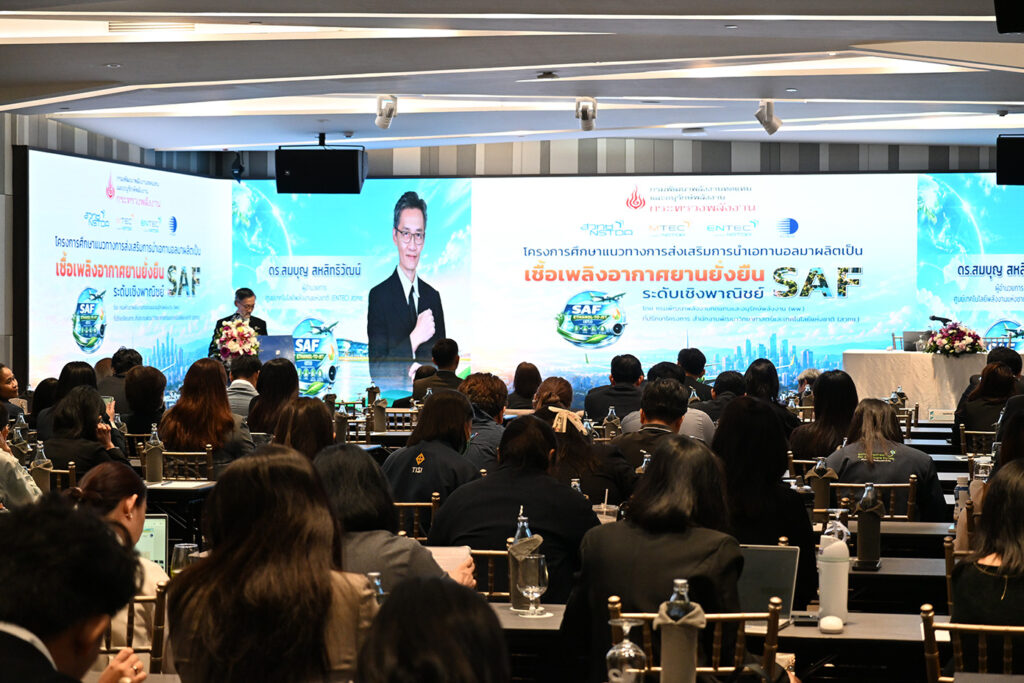
On September 30, 2026, at Novotel Bangkok on Siam Square, Bangkok
The Ministry of Higher Education, Science, Research and Innovation (MHESI), through the National Science and Technology Development Agency (NSTDA), in collaboration with the Thailand Institute of Scientific and Technological Research (TISTR), is supporting the development of Thailand’s Sustainable Aviation Fuel (SAF) industry through a study on pathways for using Thai ethanol as a feedstock for commercial-scale SAF production.
The study is being conducted as a consultancy project for the Department of Alternative Energy Development and Efficiency (DEDE), Ministry of Energy, by the National Energy Technology Center (ENTEC) and the National Metal and Materials Technology Center (MTEC) of NSTDA, together with the Center of Expertise in Clean Energy Innovation and Environment of TISTR.
The project examines the potential of Thai ethanol for SAF production through the Ethanol-to-Jet (EtJ) pathway, covering key aspects including ethanol feedstock potential, life-cycle greenhouse gas (GHG) emissions, technical and economic feasibility, as well as policy recommendations and appropriate measures to support commercial-scale development.
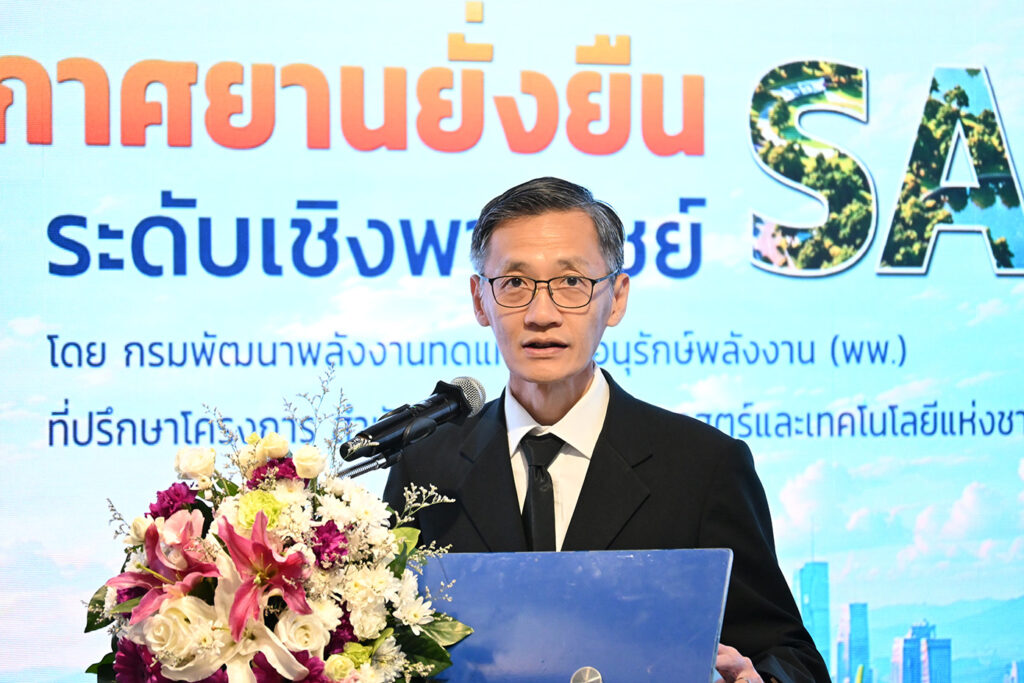
At the event, Dr. Somboon Sahasithiwat, Executive Director of ENTEC, NSTDA, expressed ENTEC’s appreciation for DEDE’s trust in selecting ENTEC as a consultant for the study, providing an opportunity for ENTEC to contribute its expertise to the development of Thailand’s SAF industry. He emphasized that the study takes a comprehensive approach, covering life-cycle GHG emissions, technical and economic feasibility, and policy and support measures, with the aim of supporting Thailand’s SAF industry in line with global efforts to reduce emissions from the aviation sector.
Dr. Somboon also highlighted the importance of collaboration among the project consulting team, DEDE, government agencies, private-sector stakeholders, ethanol and fuel operators, and relevant experts. Their contributions are essential to gathering and analyzing comprehensive data and incorporating stakeholder perspectives into practical recommendations for the future development of Thailand’s SAF industry.
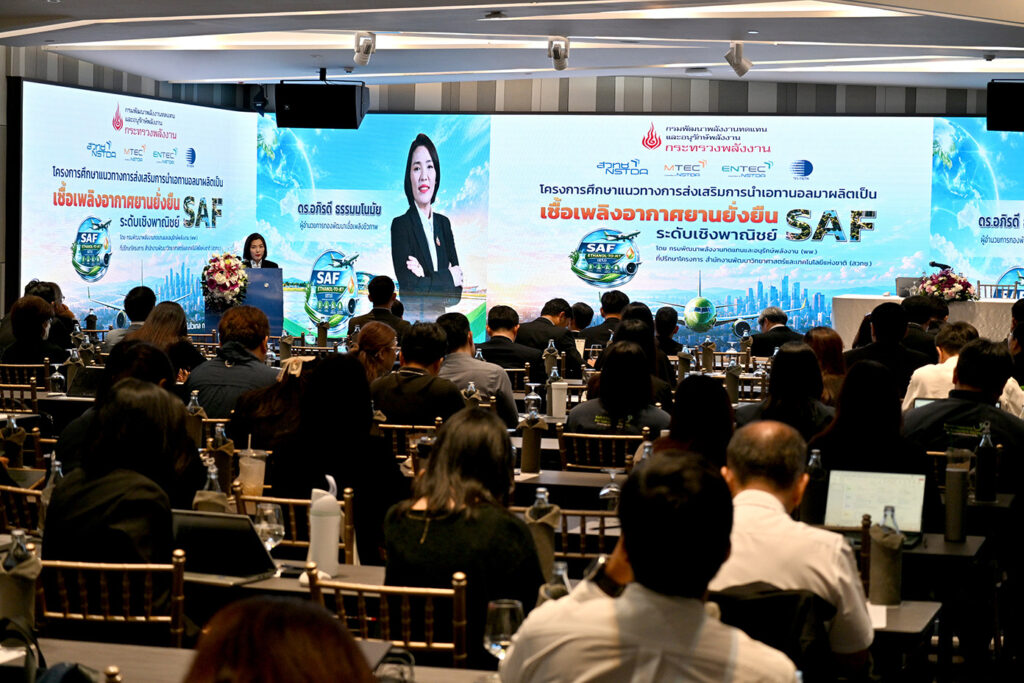
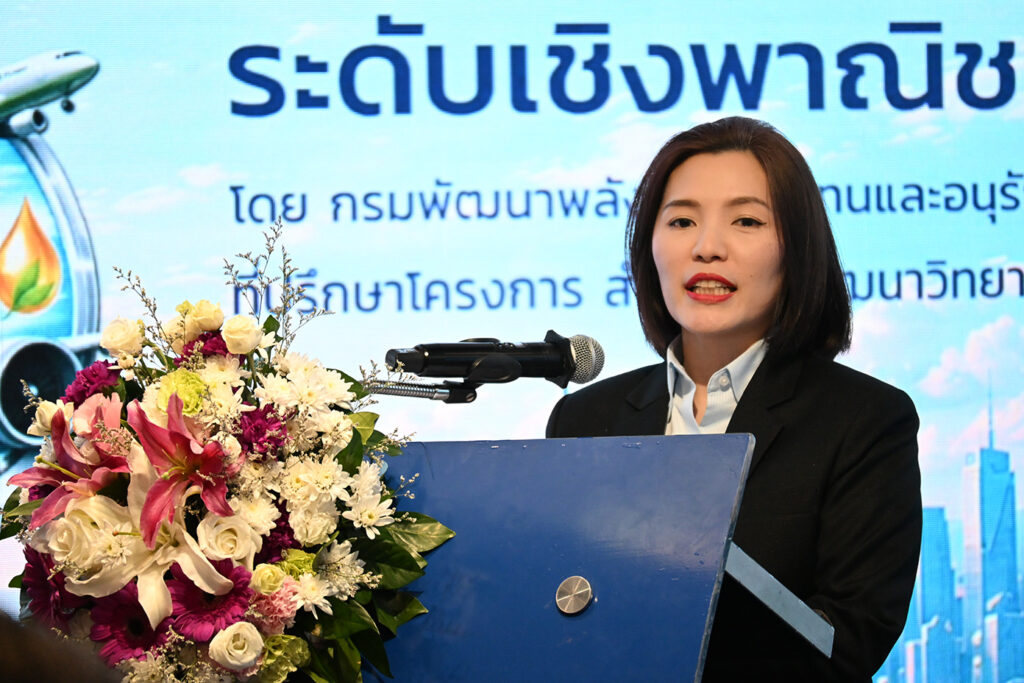
Dr. Apiradee Thammanomai, Director of the Biofuel Development Division, Department of Alternative Energy Development and Efficiency (DEDE), said that the global aviation sector is accelerating efforts to reduce greenhouse gas emissions in response to climate change, with Sustainable Aviation Fuel (SAF) playing an important role in advancing the sector toward greater sustainability. Thailand has strong potential in agricultural feedstocks and a well-established ethanol industry that could be further developed for SAF production through the Ethanol-to-Jet (EtJ) pathway. This presents an opportunity to add value to agricultural products, strengthen energy security, and enhance Thailand’s competitiveness.
Dr. Apiradee also highlighted the importance of the study, noting that DEDE is examining pathways to promote the commercial-scale production of SAF from ethanol, life-cycle environmental impacts, and policy recommendations. The study draws on both domestic and international data, as well as input from relevant stakeholders, to develop practical and appropriate approaches for implementation.
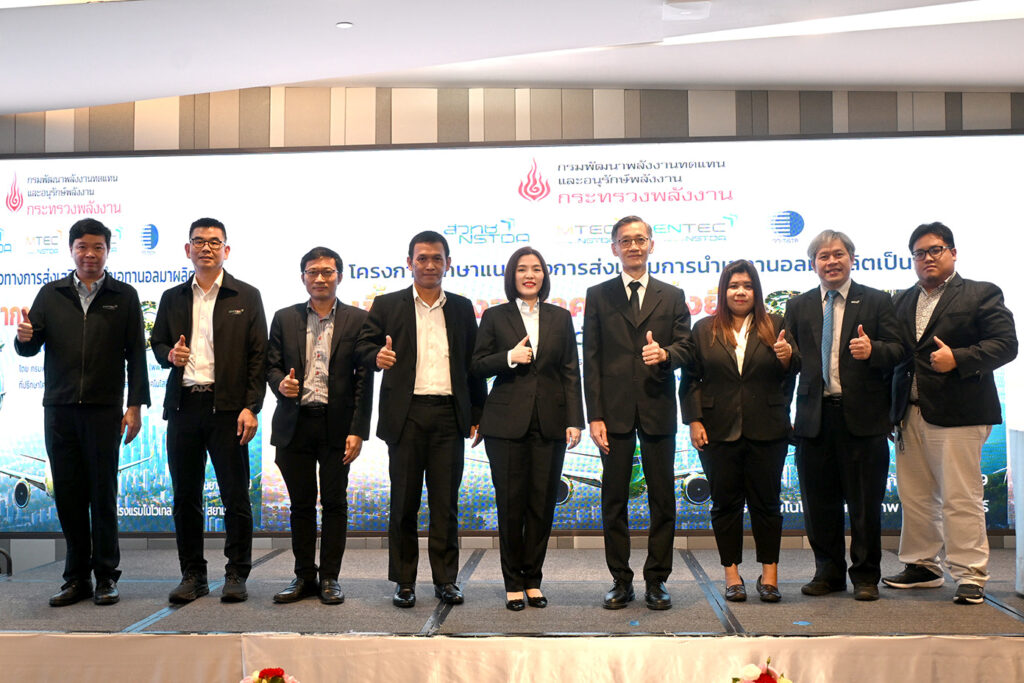
A key focus of the project is assessing the potential of ethanol through the Ethanol-to-Jet (EtJ) pathway, including the feasibility of using ethanol as a feedstock for commercial-scale SAF production in connection with Thailand’s agricultural resources and ethanol industry. The seminar featured the study findings under the topic “Thailand’s Sustainable Aviation Fuel Outlook: The Potential of Ethanol through the Ethanol-to-Jet Pathway,” together with technical and economic assessments of commercial-scale SAF production from ethanol, highlighting the opportunities and key considerations for advancing the technology in Thailand.
Another key component of the study is the assessment of life-cycle greenhouse gas (GHG) emissions, ensuring that the development of SAF takes into account environmental impacts from feedstock production through to final use, alongside technical and economic feasibility assessments. This comprehensive approach goes beyond production capacity to evaluate the potential for GHG emissions reduction and the factors affecting the feasibility of commercial-scale development, which is one of the project’s key objectives.
The study findings indicate that SAF produced from Thai ethanol can reduce GHG emissions by more than 50%, and by more than 65% when produced from molasses, a by-product of Thailand’s agricultural production.
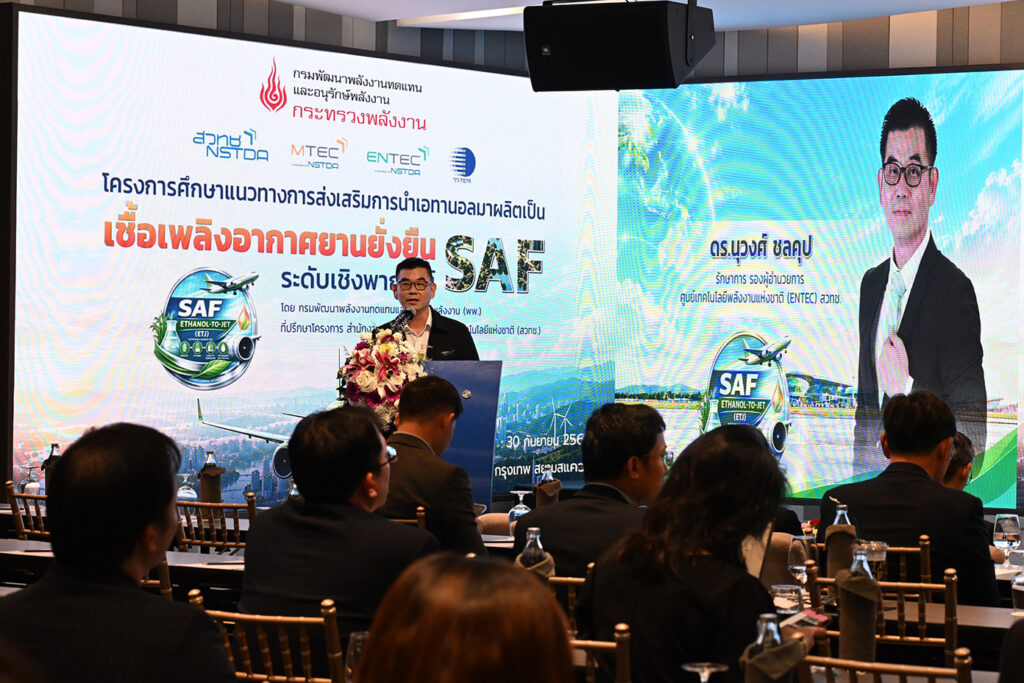
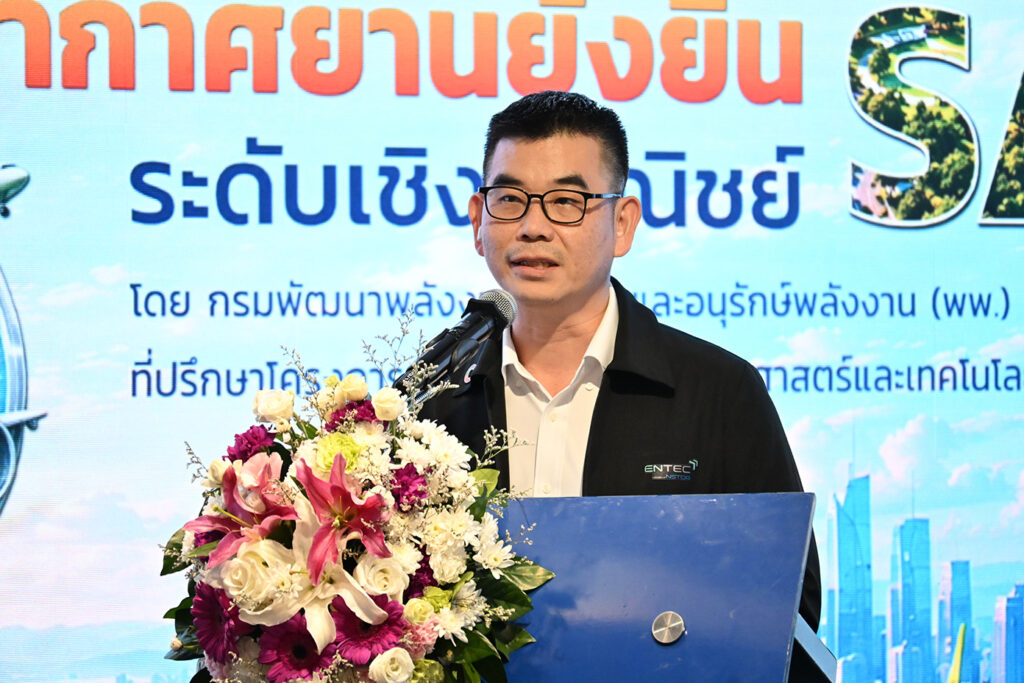
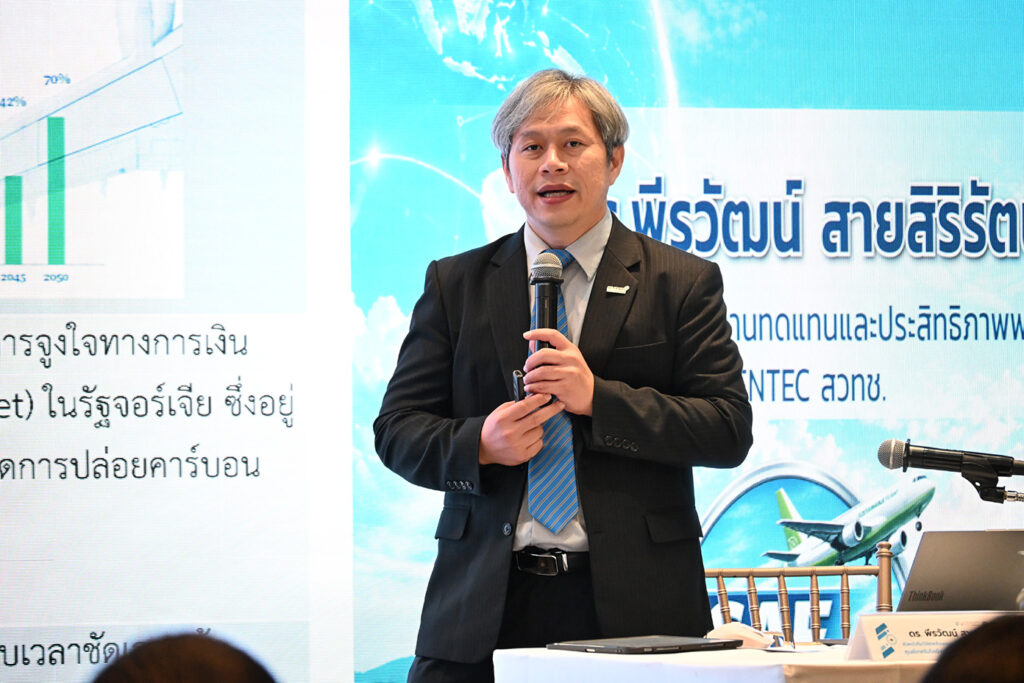
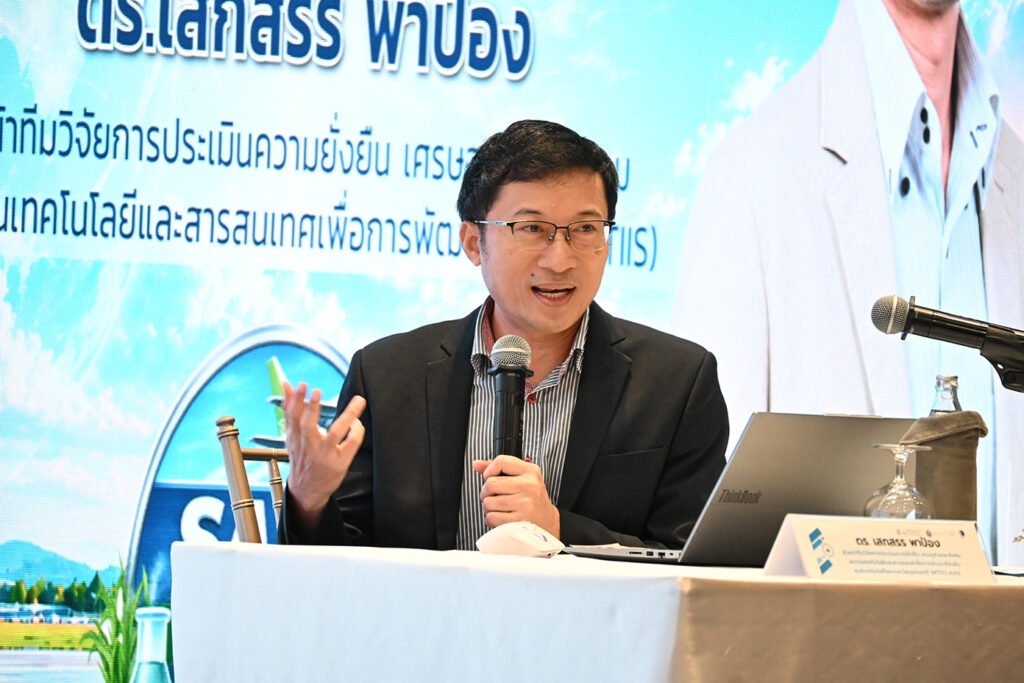
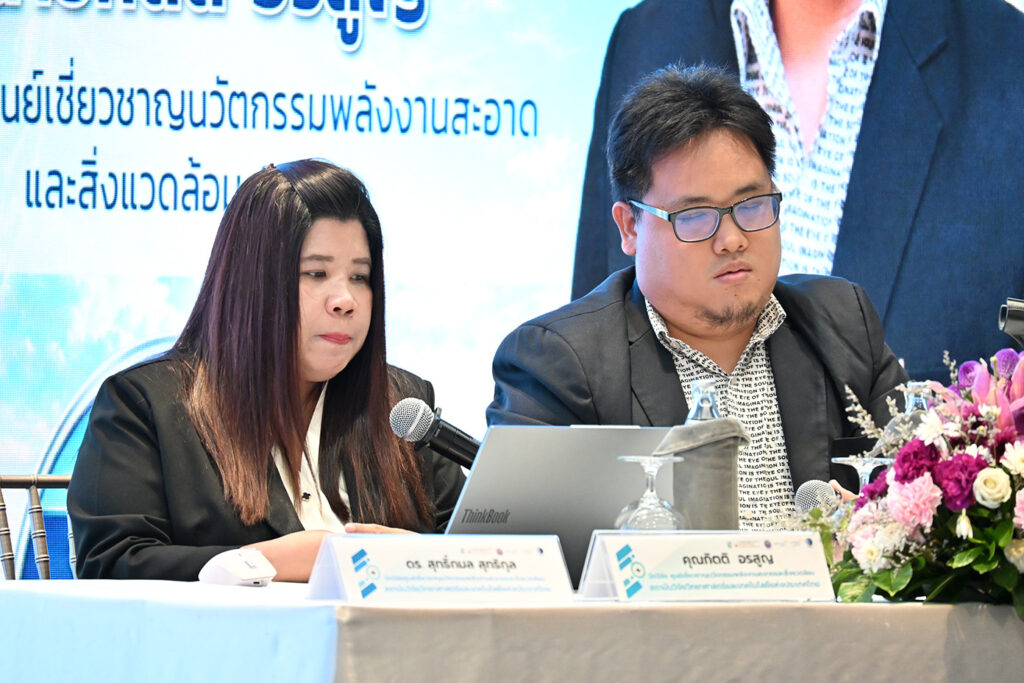
NSTDA, through ENTEC and MTEC, together with TISTR, is translating research knowledge into policy recommendations. The project is led by Dr. Nuwong Chollacoop, Acting Deputy Executive Director of ENTEC, with Dr. Peerawat Saisirirat, Team Leader of the Renewable Energy and Energy Efficiency Research Team, Low Carbon Energy Research Group, ENTEC, and Dr. Seksan Papong, Team Leader of the Sustainability, Economy and Social Assessment Research Team, Technology and Informatics Institute for Sustainability (TIIS), MTEC, together with Dr. Suttikamol Suttikul and Mr. Kitti Orasoon, researchers from the Center of Expertise in Clean Energy Innovation and Environment (CECI), TISTR. The team contributed to presenting policy recommendations and support measures for promoting the use of ethanol for SAF production, as well as summarizing the seminar outcomes. This represents an important step in translating scientific and technological findings into national-level policy and support measures.
The project has also benefited from close collaboration with DEDE’s working team, government agencies, private-sector stakeholders, fuel and ethanol producers and traders, and experts in relevant fields. Their data, perspectives, and recommendations were incorporated into the analysis to ensure that the study findings are comprehensive and aligned with Thailand’s context.
The seminar also provided a platform for industry stakeholders and relevant organizations to exchange views on potential approaches and mechanisms for promoting ethanol-based SAF production in the future. These perspectives will serve as inputs for the development of appropriate policies and support measures.
Overall, the project demonstrates an integrated approach to energy research and technology development, spanning technology potential assessment, environmental impact assessment, economic feasibility analysis, and policy recommendations. The findings provide important evidence to support consideration of pathways and measures for commercial-scale ethanol-based SAF production, enabling Thailand to leverage its agricultural resources and ethanol industry while reducing GHG emissions and advancing a more sustainable aviation sector.
