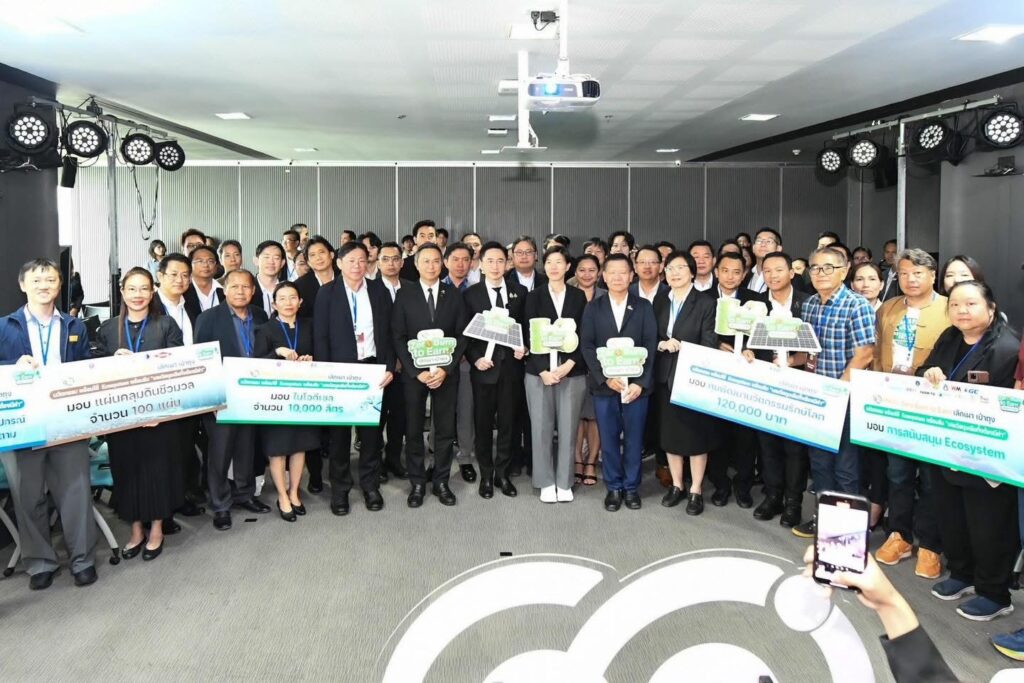
On April 28, 2026, Professor Dr. Yodchanan Wongsawat, Deputy Prime Minister and Minister of Higher Education, Science, Research and Innovation (MHESI), delivered a policy keynote on leveraging innovation and ecosystem development to address the PM 2.5 crisis and energy management. The address coincided with the official launch of the “PMUC Zero Burn to Earn” project at Waghor Room 1-2, PMUC, Chamchuri Square, Bangkok.
Under the concept “Transforming Waste into Wealth,” the project encourages farmers to eliminate agricultural burning by converting crop residues into high-value assets. Participants can exchange agricultural waste for biodiesel, high-quality second-hand solar panels, and biomass ground cover. The initiative is being piloted in Chiang Mai through an integrated partnership between government agencies, universities, and the private sector to drive a concrete and sustainable reduction in open burning.
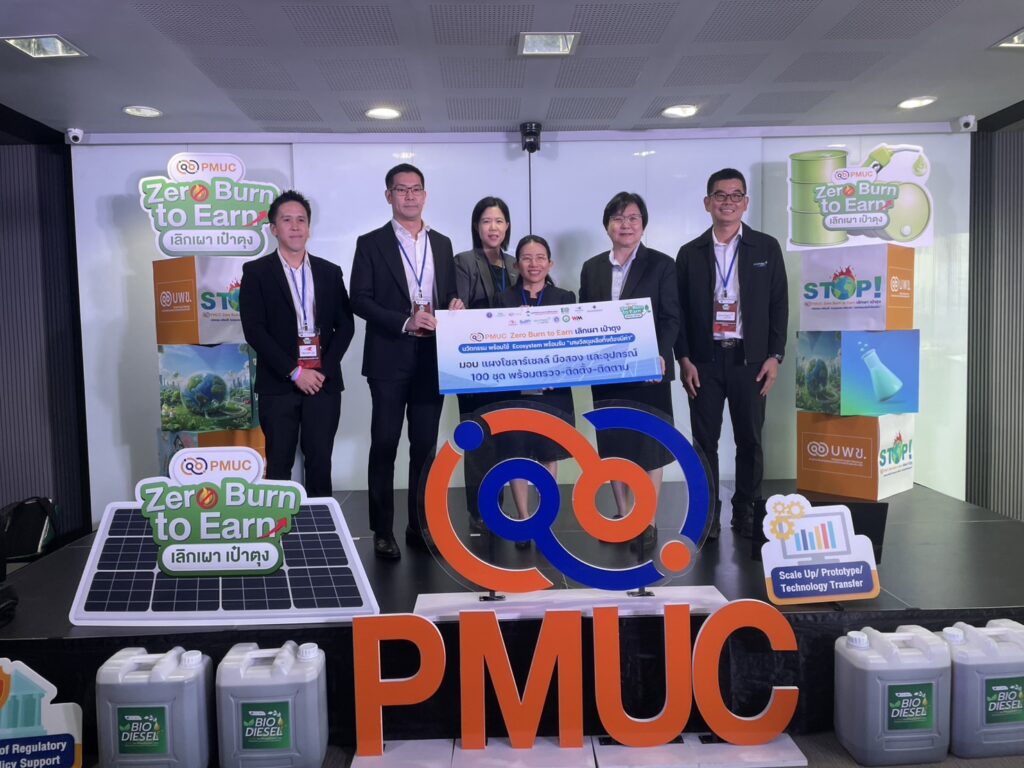
A key contributor to this ecosystem is the National Energy Technology Center (ENTEC), under the National Science and Technology Development Agency (NSTDA). ENTEC has deployed its “SolarSure” platform, a specialized screening and tracking system for used solar panels, alongside the NECTEC Standard 1011-2565 for assessing the readiness of pre-owned photovoltaic modules. Developed by ENTEC’s Solar Photovoltaic Research Team, Energy Innovation Research Group with support from the Program Management Unit for Competitiveness (PMUC), these tools ensure that second-hand panels distributed through the project meet rigorous quality and safety standards.
Dr. Sumittra Charojrochkul, Executive Director of ENTEC, emphasized the critical importance of end-of-life solar management. She noted that as solar energy adoption accelerates, a systemic approach to managing panels, focusing on the circular economy, environmental protection, and community safety, is essential.
“The SolarSure platform plays a vital role in inspecting, screening, and monitoring solar panels throughout their entire lifecycle,” Dr. Sumitra stated. “It allows us to maximize the utility of panels that still have functional potential while ensuring that degraded units are disposed of correctly, thereby mitigating the future risk of hazardous waste.”
Beyond providing technical platforms, ENTEC is committed to local capacity building. The center is organizing training programs for vocational institutions and local authorities to develop a skilled workforce proficient in solar inspection and management. This initiative not only supports the current project but also lays the groundwork for the long-term growth of Thailand’s clean energy industry.
