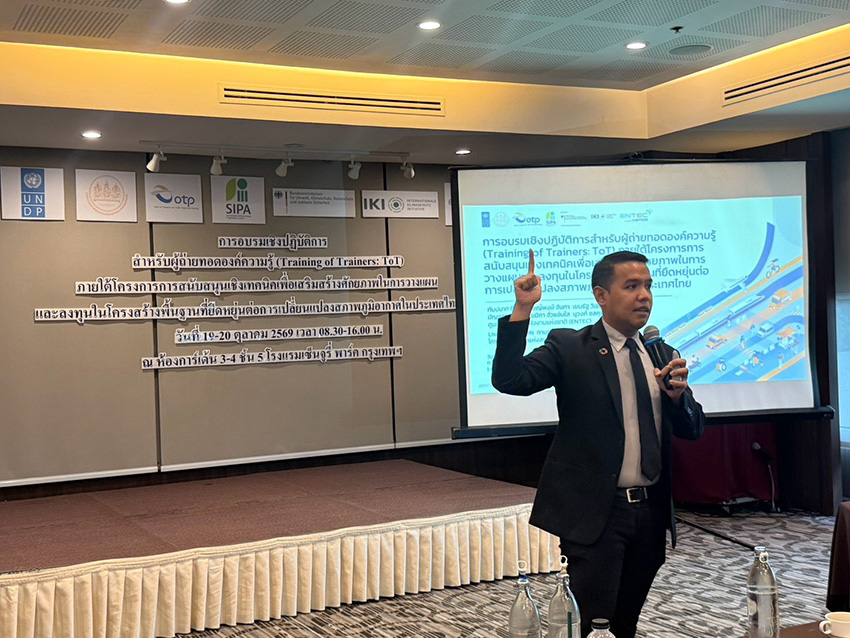
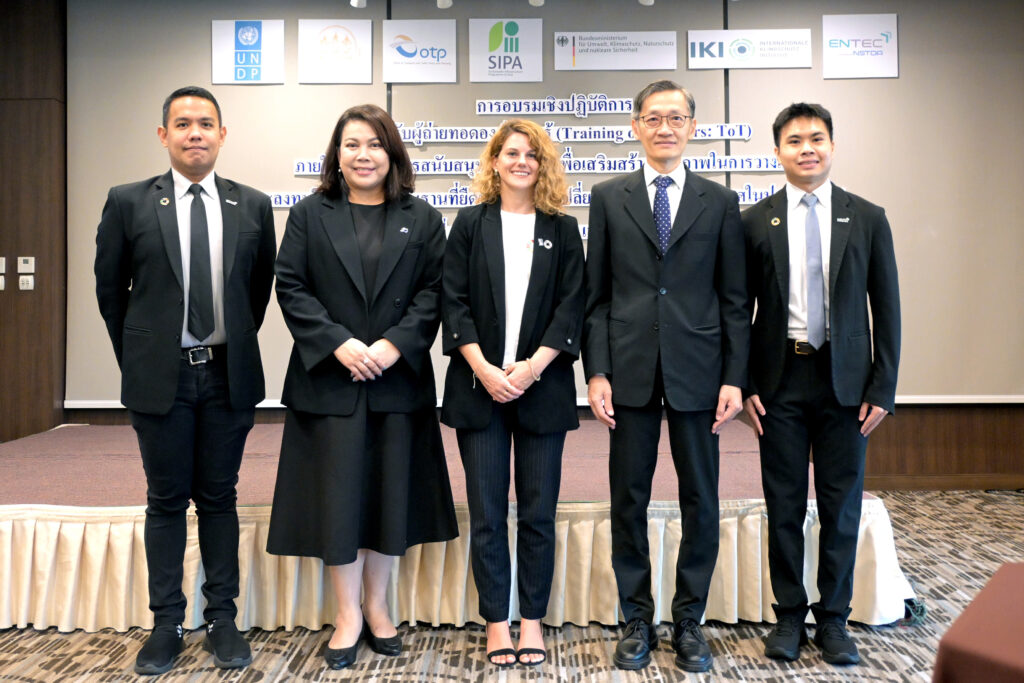
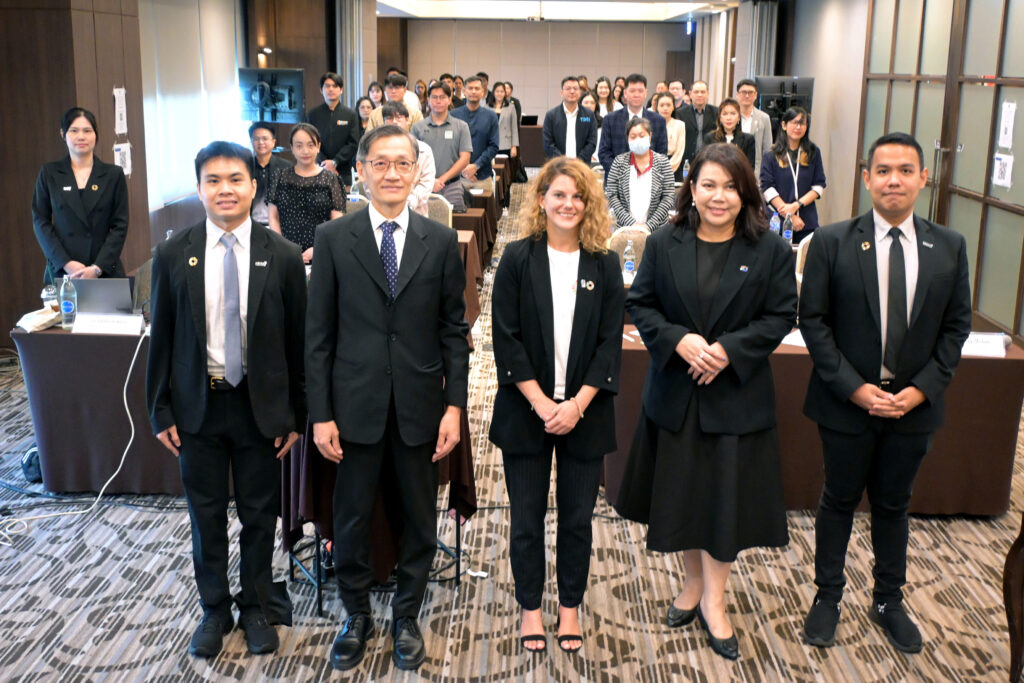
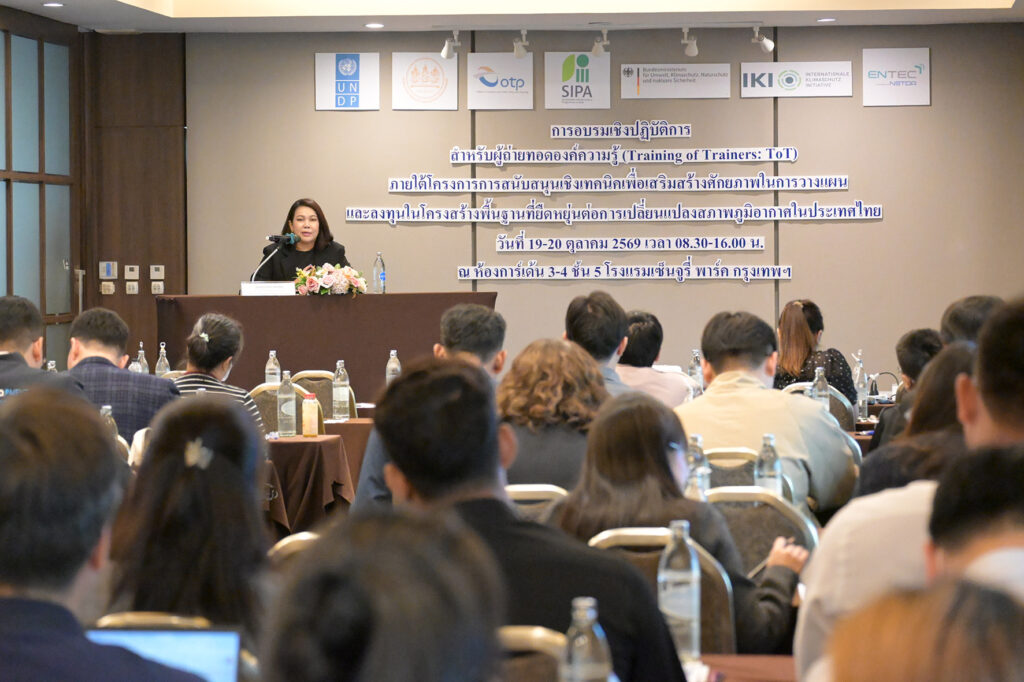
October 19–20, 2026 Century Park Hotel, Bangkok, Thailand
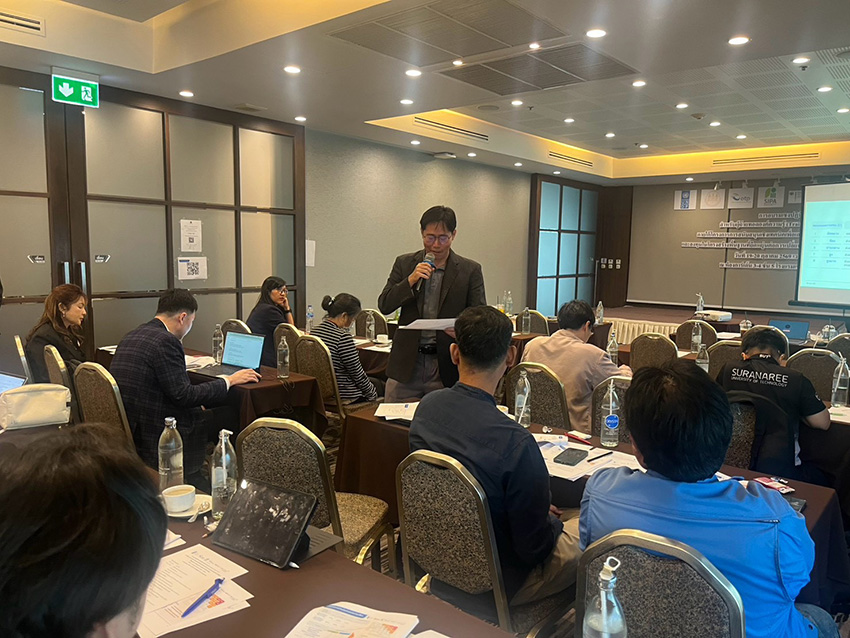
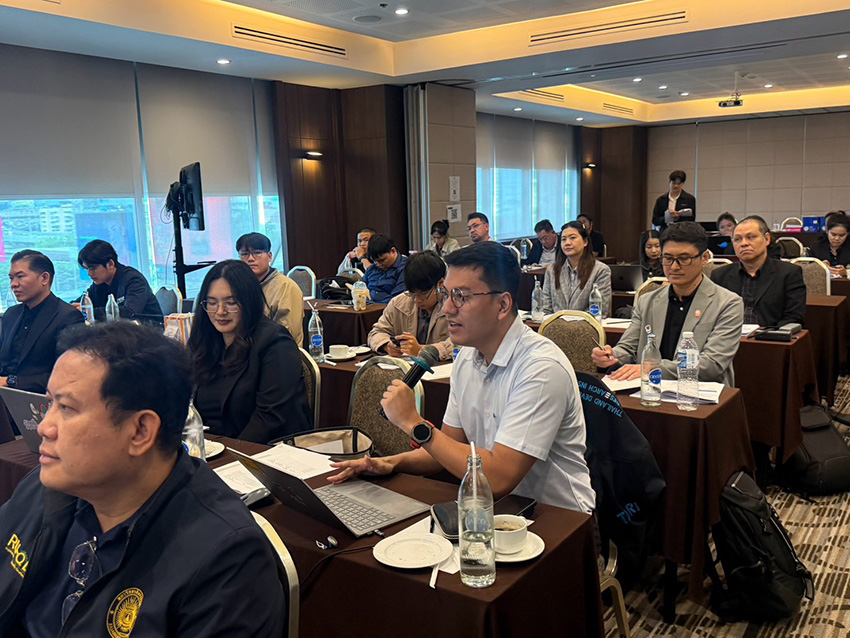
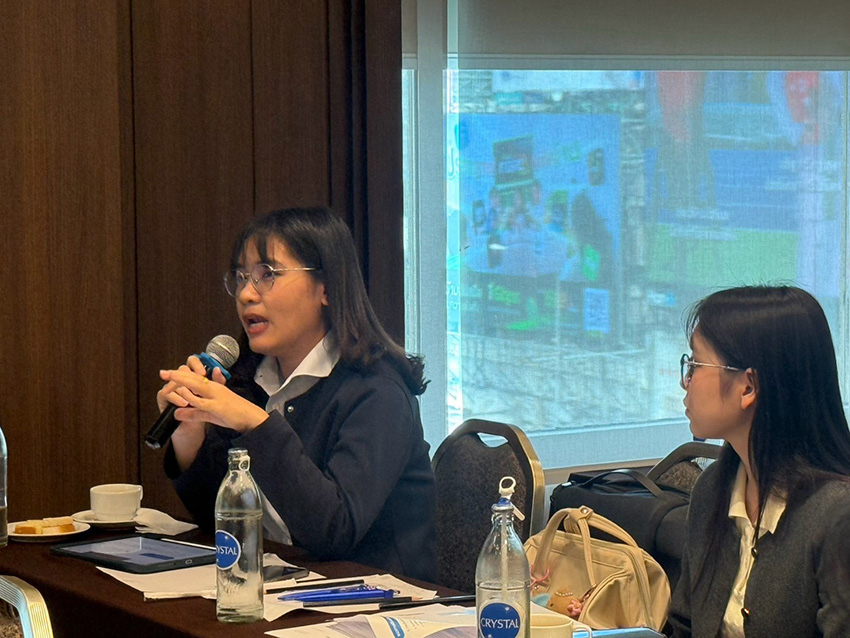
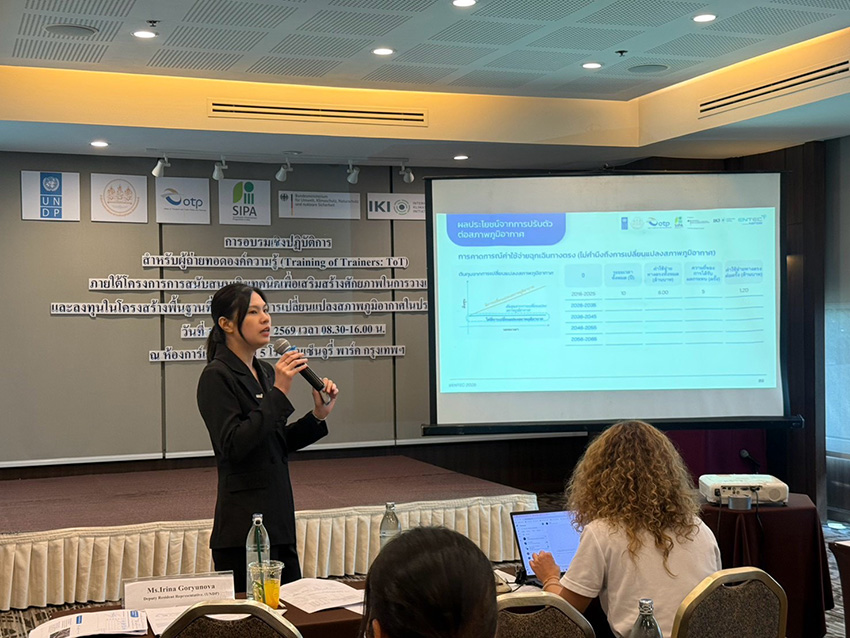
The National Science and Technology Development Agency (NSTDA), through the National Energy Technology Center (ENTEC), organized a Training of Trainers (ToT) workshop under the Technical Assistance Project for Strengthening Capacity in Planning and Investing in Climate-Resilient Infrastructure in Thailand. The project was commissioned by the United Nations Development Programme (UNDP) in Thailand, in collaboration with the Office of Transport and Traffic Policy and Planning (OTP) and the Office of the National Economic and Social Development Council (NESDC).
The workshop aimed to strengthen participants’ capacity in climate risk assessment, cost-benefit analysis, and financial considerations to support investment decisions and the sustainable development of transport infrastructure.
The opening session featured remarks by Dr. Somboon Sahasithiwat, Executive Director of ENTEC, NSTDA; Mrs. Chutinthorn Mankong, Director of the Safety Planning Bureau at OTP; and Ms. Lisa Louveton, representing UNDP.
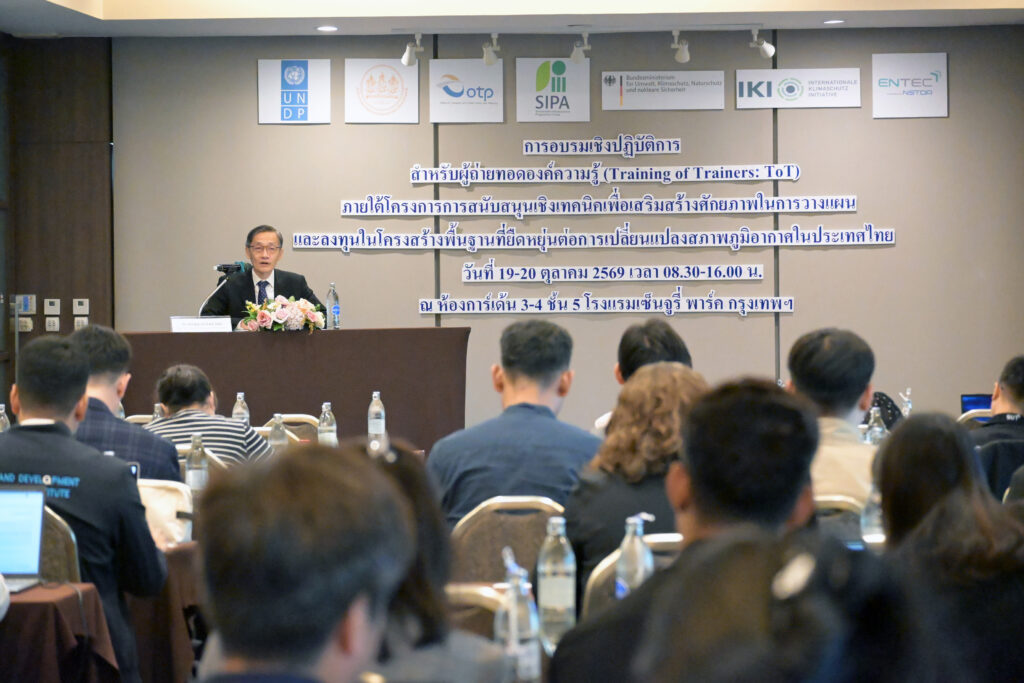
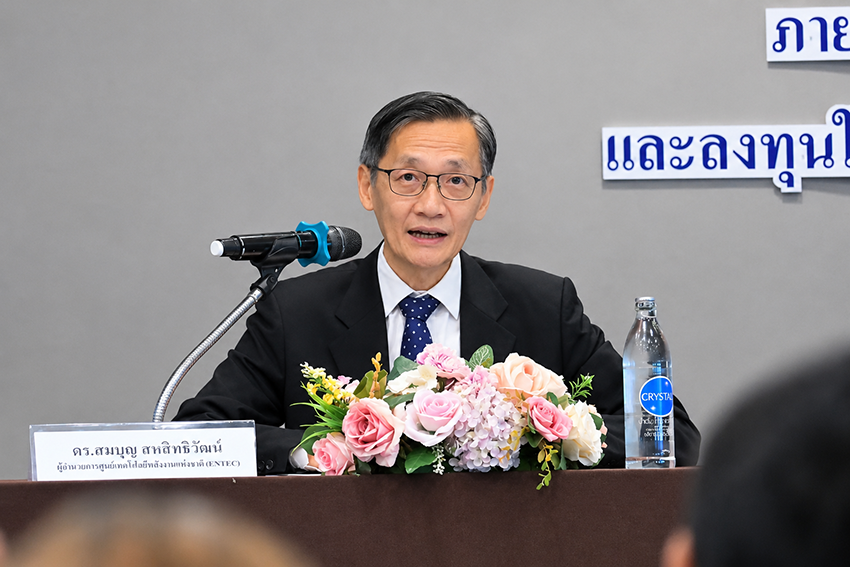
Dr. Somboon Sahasithiwat, Executive Director of ENTEC, NSTDA, emphasized that developing climate-resilient transport infrastructure requires planning and investment approaches that account for long-term climate risks.
ENTEC, in collaboration with UNDP, OTP, and NESDC, has developed practical guidelines covering climate risk assessment, cost-benefit analysis, and financial considerations. Feedback from relevant agencies has also been incorporated to refine the tools and ensure their suitability for practical application.
“The key objective of this Training of Trainers workshop is to develop personnel who can disseminate these guidelines and tools to others. Participants should not only understand the underlying principles but also be able to apply them in teaching, research, and infrastructure development planning at the local level,” Dr. Somboon explained.
He added that addressing climate change requires collaboration and knowledge from multiple disciplines. ENTEC is committed to further developing this knowledge and expanding collaborative networks to ensure that Thailand’s infrastructure investments are resilient and sustainably prepared for climate-related risks.
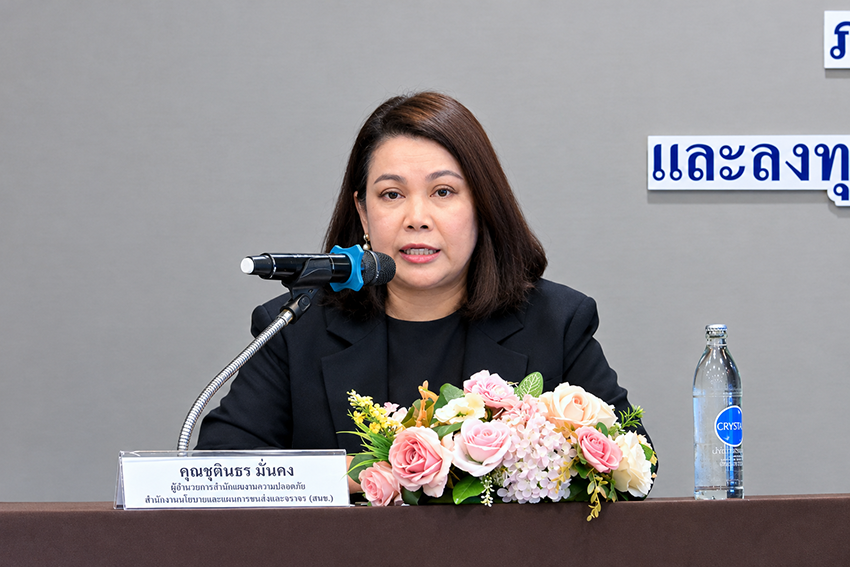
Mrs. Chutinthorn Mankong, Director of the Safety Planning Bureau at the Office of Transport and Traffic Policy and Planning (OTP), stated that Thailand needs to develop its transport systems by addressing climate risks while reducing greenhouse gas emissions in line with its Net Zero targets.
He highlighted three key approaches to infrastructure planning and investment:
- Designing infrastructure to withstand extreme weather events to improve resilience to climate-related hazards.
- Developing low-carbon infrastructure to reduce greenhouse gas emissions, including through the use of clean energy.
- Adopting nature-based solutions to mitigate the impacts of natural hazards, such as improving drainage systems to accommodate increased rainfall and restoring ecosystems.
He emphasized that sustainable transport development cannot be achieved by the public sector alone. It requires collaboration among academic institutions, researchers, and relevant agencies. In particular, knowledge of engineering, economics, and climate change must be integrated into policy decision-making to ensure that Thailand’s infrastructure investments are efficient, environmentally friendly, and resilient to future challenges.
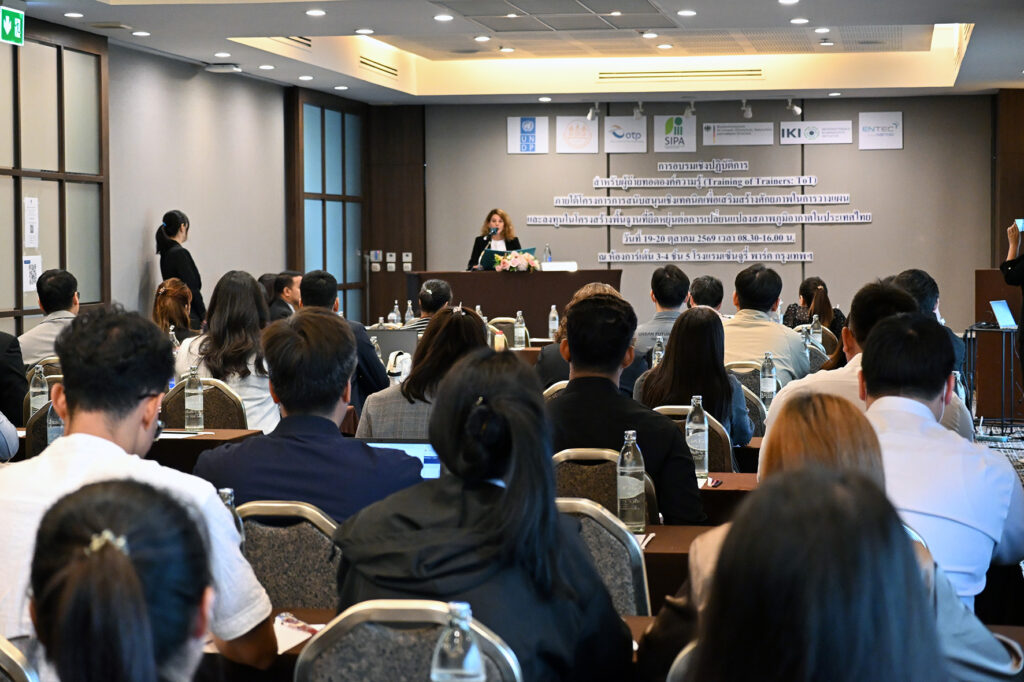

Ms. Lisa Louveton, representing the United Nations Development Programme (UNDP), highlighted that climate change is increasing risks to infrastructure, particularly transport systems, with significant implications for the economy and people’s daily lives.
Assessing climate risks at the planning and investment stages is therefore essential to prevent damage, reduce long-term costs, and ensure that infrastructure continues to function effectively under changing climate conditions.
UNDP is committed to supporting the practical application of climate risk assessment knowledge and tools through collaboration with Thai agencies and capacity-building initiatives for faculty members and trainers. These efforts aim to enable the wider dissemination of knowledge among infrastructure practitioners.
The ultimate goal is to develop infrastructure that is resilient to climate risks, makes efficient use of public resources, and delivers sustainable benefits to Thailand.
The workshop covered three key areas of knowledge:
- Climate Risk Assessment (CRA): Identifying and assessing potential climate-related risks to infrastructure.
- Cost-Benefit Analysis (CBA): Evaluating the economic viability and value of infrastructure investments.
- Sustainable Infrastructure Investment Financing: Understanding financial approaches and considerations for investing in sustainable infrastructure.
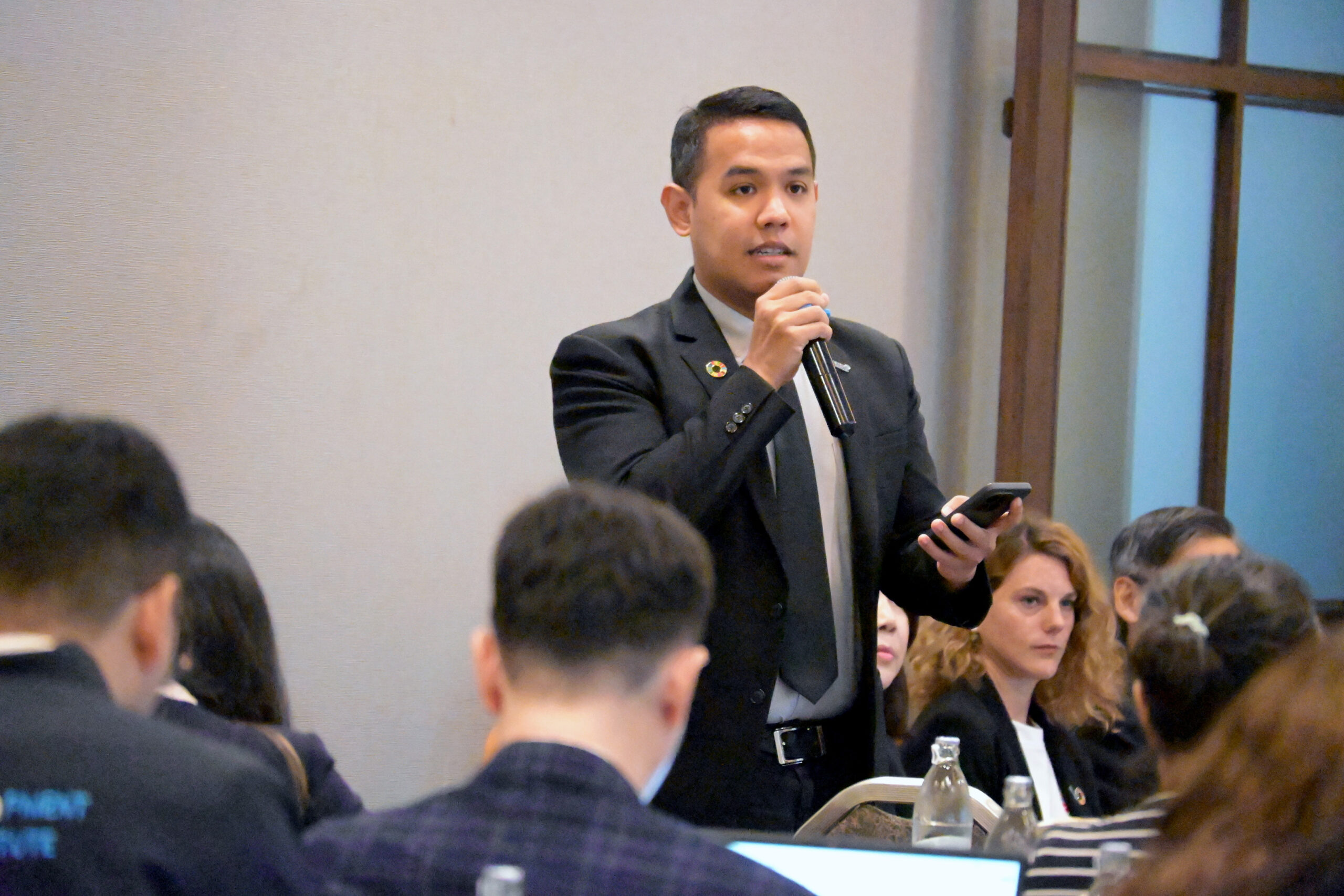
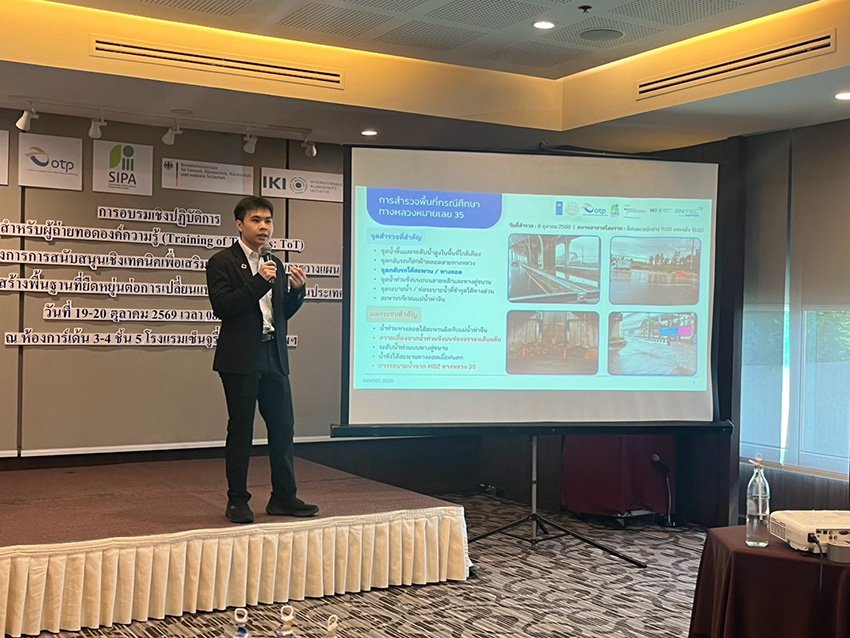
The sessions were delivered by Dr. Kampanart Silva, Researcher, and Mr. Pidpong Janta, Research Assistant, from the Renewable Energy and Energy Efficiency Research Team, Low Carbon Energy Research Group, ENTEC, NSTDA. The training combined lectures with practical exercises to enable participants to apply the principles and tools in their professional work.
Developing trainers is a key mechanism for extending the project’s knowledge and tools to a broader audience. Participants are expected to apply the guidelines and tools to support systematic planning and investment project appraisal, integrating climate risk considerations with economic viability.
This capacity-building initiative will help ensure that infrastructure investment decisions place greater emphasis on sustainability and long-term resilience to climate change, supporting Thailand’s efforts to develop infrastructure that can withstand future climate-related challenges.