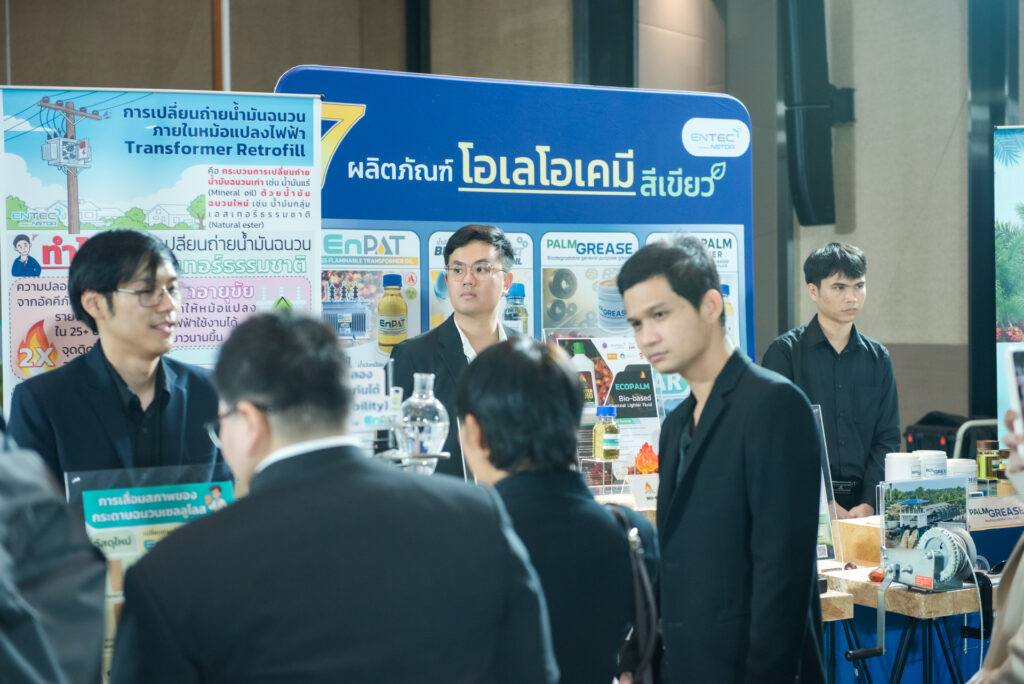
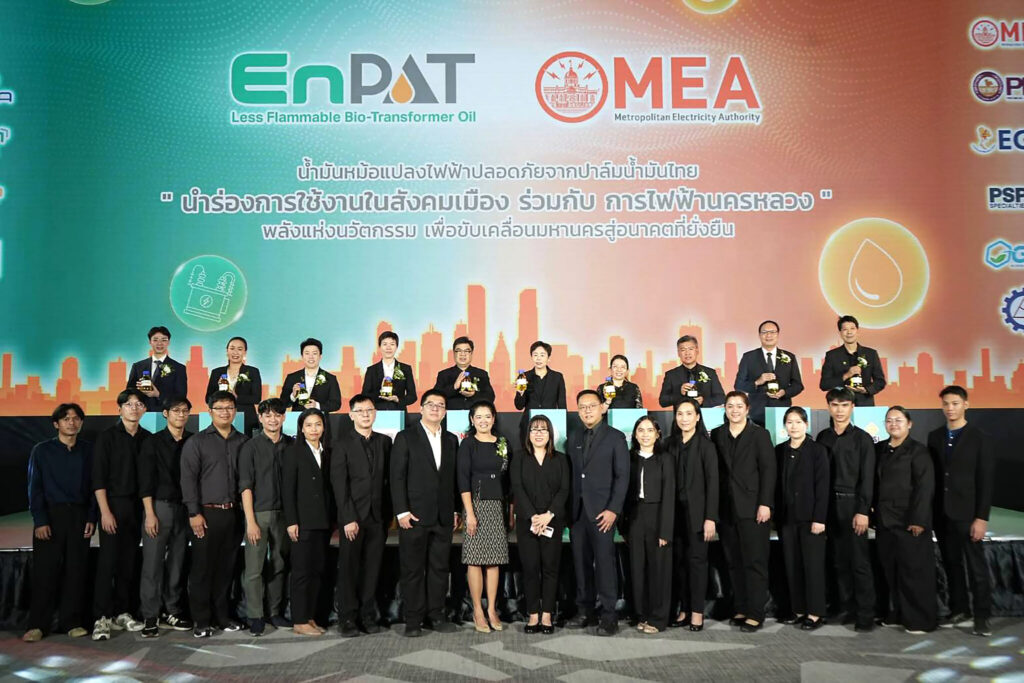
On December 4, 2025, at the Metropolitan Electricity Authority Headquarters, Bangkok
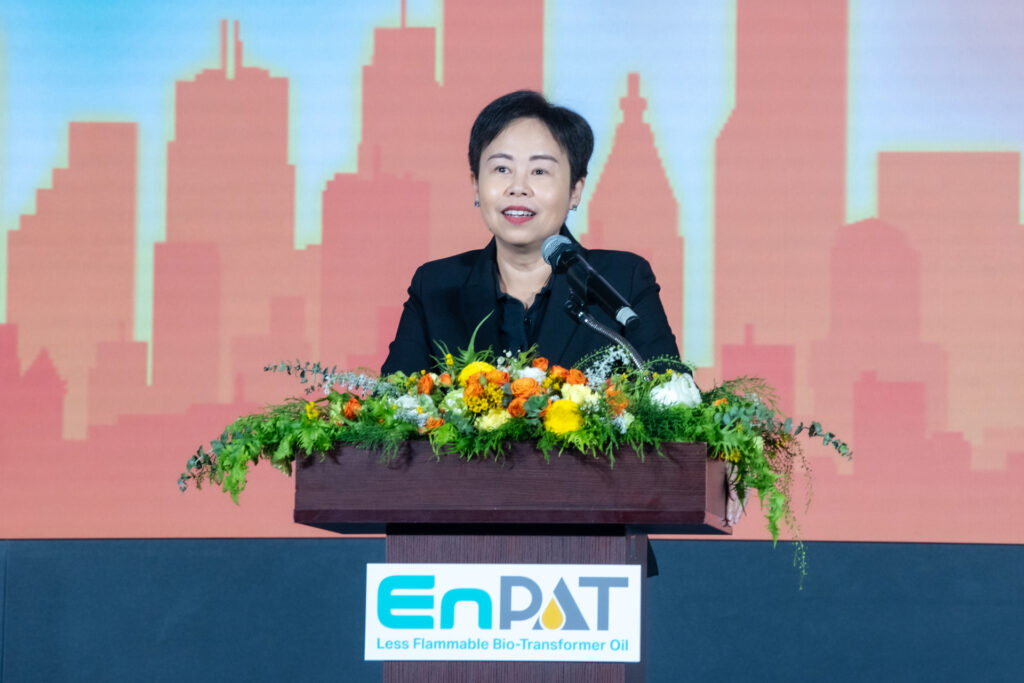
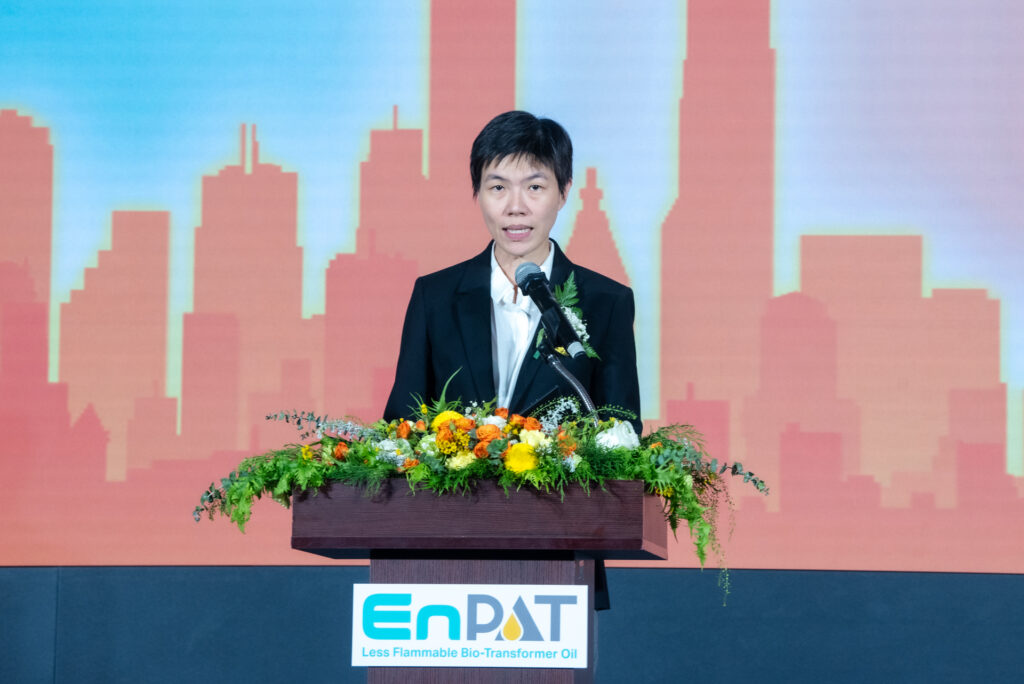
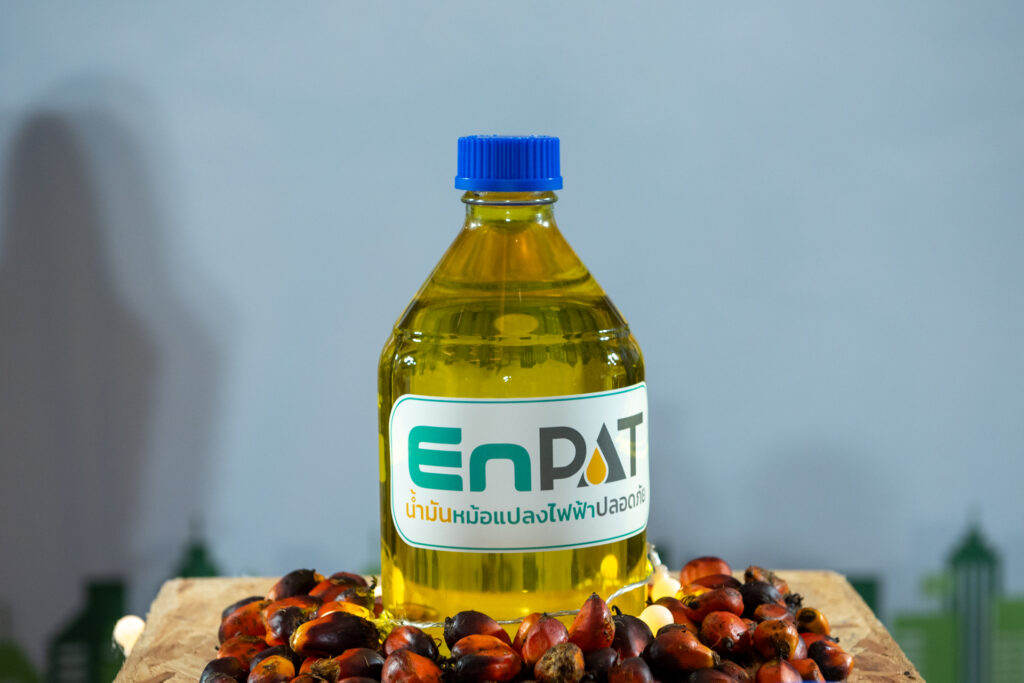
Mr. Direk Boonpiyathud, Deputy Governor for Power System Planning and Innovation of the Metropolitan Electricity Authority (MEA), presided over the press conference announcing the deployment of EnPAT, a safe bio-based transformer oil derived from Thai palm oil, in urban power systems. Under the theme “EnPAT: The Power of Innovation Driving the Metropolis Toward a Sustainable Future,” the event brought together key stakeholders including Assoc. Prof. Dr. Tavida Kamolvej, Deputy Governor of Bangkok, Asst. Prof. Dr. Kanda Boonsothonsatit, Director of the Program Management Unit for Competitiveness (PMUC), Dr. Sumittra Charojrochkul, Executive Director of the National Energy Technology Center (ENTEC), NSTDA, Dr. Boonyawan Yoosuk, EnPAT Development Project Leader and Team Leader of the Clean Fuel and Advanced Chemistry Technology Research Team at ENTEC’s Low Carbon Energy Research Group, and representatives from major organizations including Mr. Tripob Thiantavorn, Manager of Distribution Transformer Management from the Provincial Electricity Authority (PEA), Mr. Suthep Singharek, Director of Asset Management from the Electricity Generating Authority of Thailand (EGAT), Mr. Asirawat Photiphan, Senior Specialist from the Thai Industrial Standards Institute (TISI), Mr. Sakesan Krongphanich, Deputy Chief Executive Officer from P.S.P. Specialties Public Company Limited, Dr. Thanyarat Boontheekul, Marketing and Business Development Manager from Global Green Chemicals Public Company Limited, and Mr. Kawin Kittirattanaviwat, Assistant Production Manager from Charoenchai Transformer Company Limited.
MEA Celebrates Milestone in Green Energy Innovation
Mr. Direk Boonpiyathud expressed MEA’s pride in collaborating with NSTDA and partners on EnPAT development, culminating in the successful pilot installation of the first EnPAT-filled transformer in MEA’s distribution system at the Lat Krabang District office on October 10, 2025. This milestone represents a significant breakthrough in energy innovation that addresses safety, sustainability, and the metropolis’s future. EnPAT aligns with Thailand’s Net Zero 2050 target and MEA’s Green Electricity vision, providing clean and reliable electricity to both citizens and businesses.
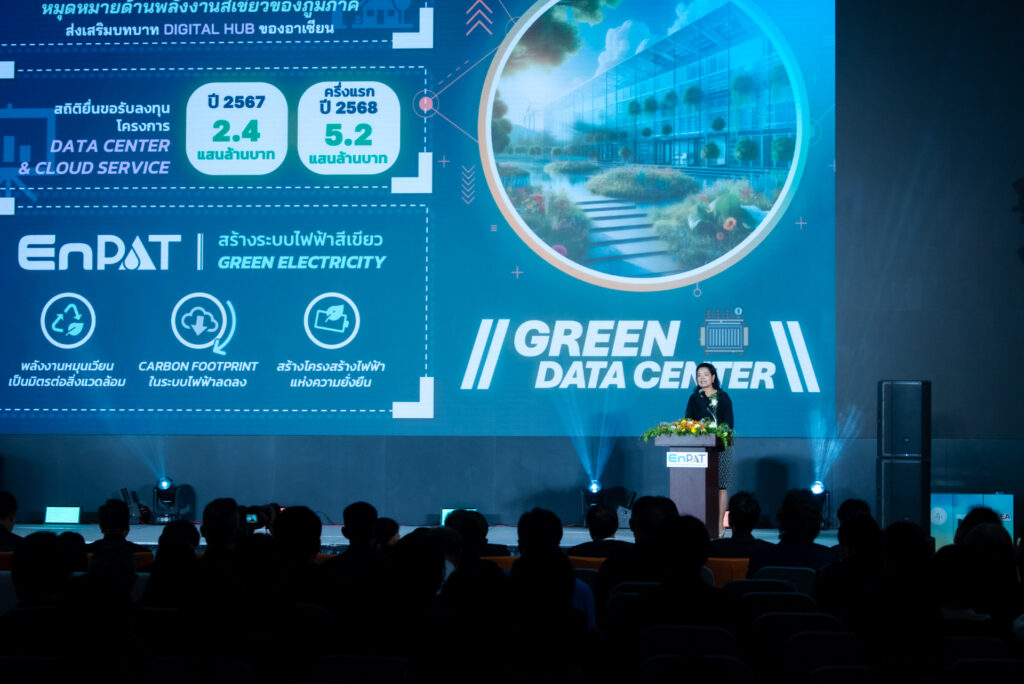
“Green Electricity isn’t just about the environment—it’s an economic opportunity,” Mr. Direk noted. “Particularly as Thailand positions itself as a regional Green Data Center hub, which requires clean, stable power. MEA is ready to support this infrastructure.” He added that EnPAT also creates value for Thailand’s palm oil industry, providing stable income for over 400,000 farming households while serving as a model for expansion to other critical areas, establishing new standards for safety and sustainability.
Bangkok Embraces Safety and Environmental Innovation
Assoc. Prof. Dr. Tavida Kamolvej emphasized that the EnPAT pilot deployment in Khlong Song Ton Nun, Lat Krabang District, reflects not only MEA’s success but also Bangkok’s vision of enhancing public utility safety and promoting environmentally friendly innovation, in line with the “Bangkok 9 Areas, 9 Excellence” policy, particularly the “Safety Excellence” aspect, which emphasizes risk reduction and preparedness.
According to Bangkok’s Department of Disaster Prevention and Mitigation statistics, from January to October 2025, there were 3,443 fire incidents, with 1,243 caused by electrical short circuits. EnPAT’s key advantage is its higher flash point compared to conventional transformer oil, making it difficult to ignite and significantly reducing fire risks from transformer explosions in residential areas. Additionally, in case of leakage, this oil is easily biodegradable and non-toxic to the environment.
“This represents proactive prevention that addresses both safety and sustainability in the capital,” Dr. Tavida stated. “Bangkok commends the research team from NSTDA, MEA and all partners for translating this innovation into practical implementation.” She emphasized Bangkok’s commitment to expanding EnPAT across all districts to ensure citywide safety and to establish the city as a model city for sustainable technology adoption. She also invited all sectors to work together to advance this innovation at the national level, for the greatest benefit of the people and the future of the country.
PMUC Recognizes Nation-Transforming Research
Asst. Prof. Dr. Kanda Boonsothonsatit highlighted that EnPAT received the “PMUC Country First Award—Thailand’s First, Nation-Transforming Research,” demonstrating its potential to unite stakeholders across the bio-based transformer oil industry value chain in creating an appropriate ecosystem ready for commercial deployment.
“The pioneering installation in Chonburi Province by PEA, followed by the expansion to Bangkok by MEA, and future deployments supported by EGAT will create clear demand and drive industrial-scale production and adoption of bio-based transformer oil,” she explained. “Today’s success reflects the integration of research, industry, and electricity providers to create concrete commercial demand. EnPAT isn’t just about creating trade opportunities—it’s about promoting agriculture according to upstream value-addition strategies, ensuring income security and improving quality of life for over 400,000 Thai palm oil farming households nationwide.”
ENTEC Opens New Chapter for Thai Energy Industry
Dr. Sumitra Charojrochkul emphasized that ENTEC is opening a new chapter for Thailand’s energy industry by connecting the value chain from palm-growing farmers to urban electricity systems. Following the government’s policy to increase palm oil value, ENTEC developed bio-based transformer oil, “EnPAT” under NSTDA’s S&T Implementation for Sustainable Thailand (STIST) strategy.
“This initiative, supported by key partners including PMUC, MEA, PEA, EGAT, P.S.P. Specialties, Global Green Chemical, Charoenchai Transformer, and TISI, leverages the proactive role of electricity authorities in piloting and policy support to create clear demand for EnPAT and drive its commercial-scale production and adoption,” Dr. Sumitra stated. “This will open doors to creating high-value new industries in Thailand and building private sector confidence in developing the supply chain from upstream to downstream. Government-led demand will not only elevate Thailand’s bio-based transformer industry but also channel income back to over 400,000 palm oil growing households.”
EnPAT: More Than Technology—A National Sustainability Solution
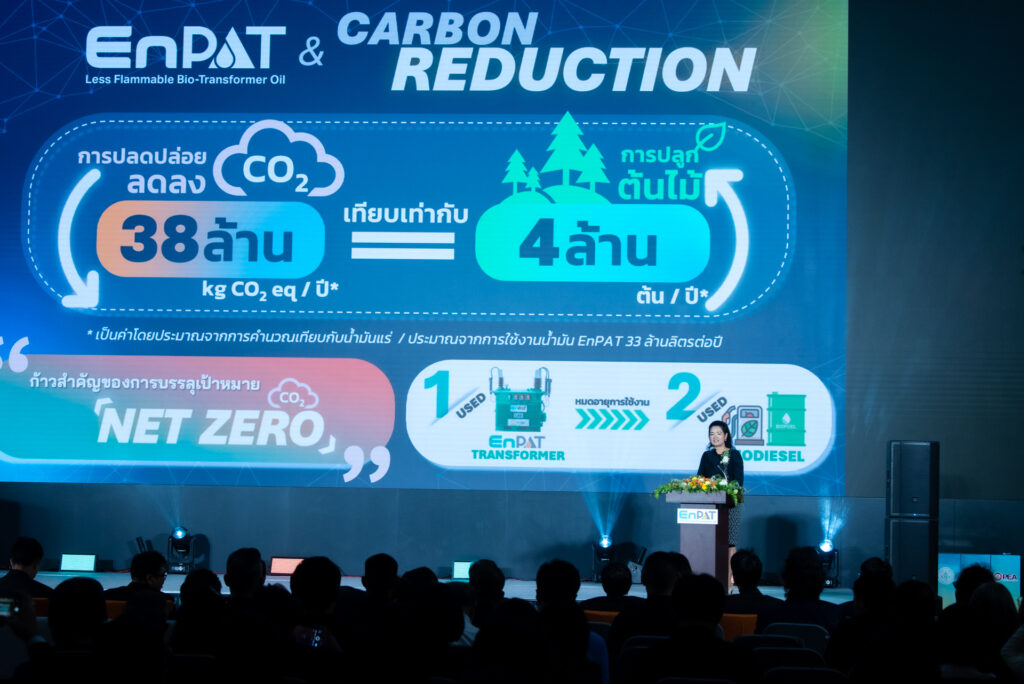
Dr. Boonyawan Yoosuk, EnPAT Development Team Leader, added that EnPAT is not just a new technology but a critical solution for reducing the electrical grid’s carbon footprint and promoting green electricity. It positions Thailand to achieve its Net Zero targets and become a regional hub for the green digital economy.
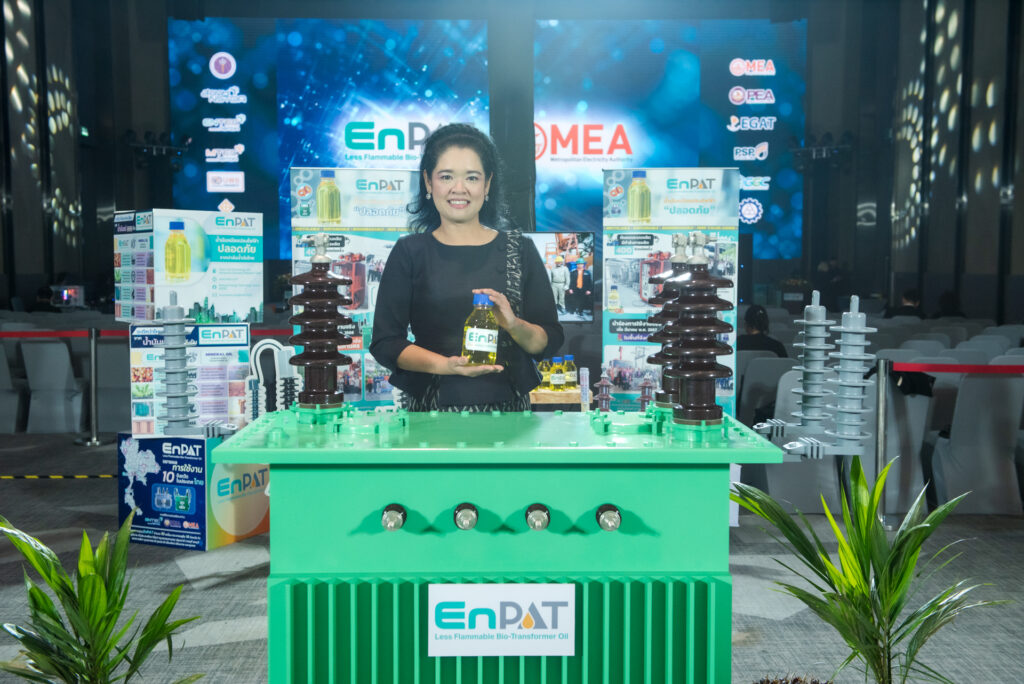
With full support from MEA, a pilot 3-phase, 150 kVA, 24 kV transformer was installed in Lat Krabang District, Bangkok. This builds upon the country’s first EnPAT transformer installation in Chonburi with PEA on March 21, 2024, which has been continuously supplying electricity for over one year and eight months.
EnPAT is now advancing into power generation systems with EGAT’s support, with plans to install EnPAT-filled transformers at the Sirindhorn Dam Solar Power Plant. Future studies will explore additional applications including: (1) amorphous core transformers, (2) instrument transformers, and (3) mineral oil replacement in transformer maintenance.
“The research team is committed to enhancing the capabilities of Thai transformer manufacturers, ensuring technical readiness and expertise in producing EnPAT-filled transformers,” Dr. Boonyawan explained. “Proactive collaboration with various transformer manufacturers is key to preparing the supply chain for future commercial demand. Government-led demand will drive private sector investment in building a strong end-to-end supply chain, strengthen the Thai electrical industry’s global competitiveness, while generate income for farmers, and boost grassroots economic development.”
EnPAT is not merely bio-based transformer oil—it is the power of collaboration for Thailand’s sustainable future.