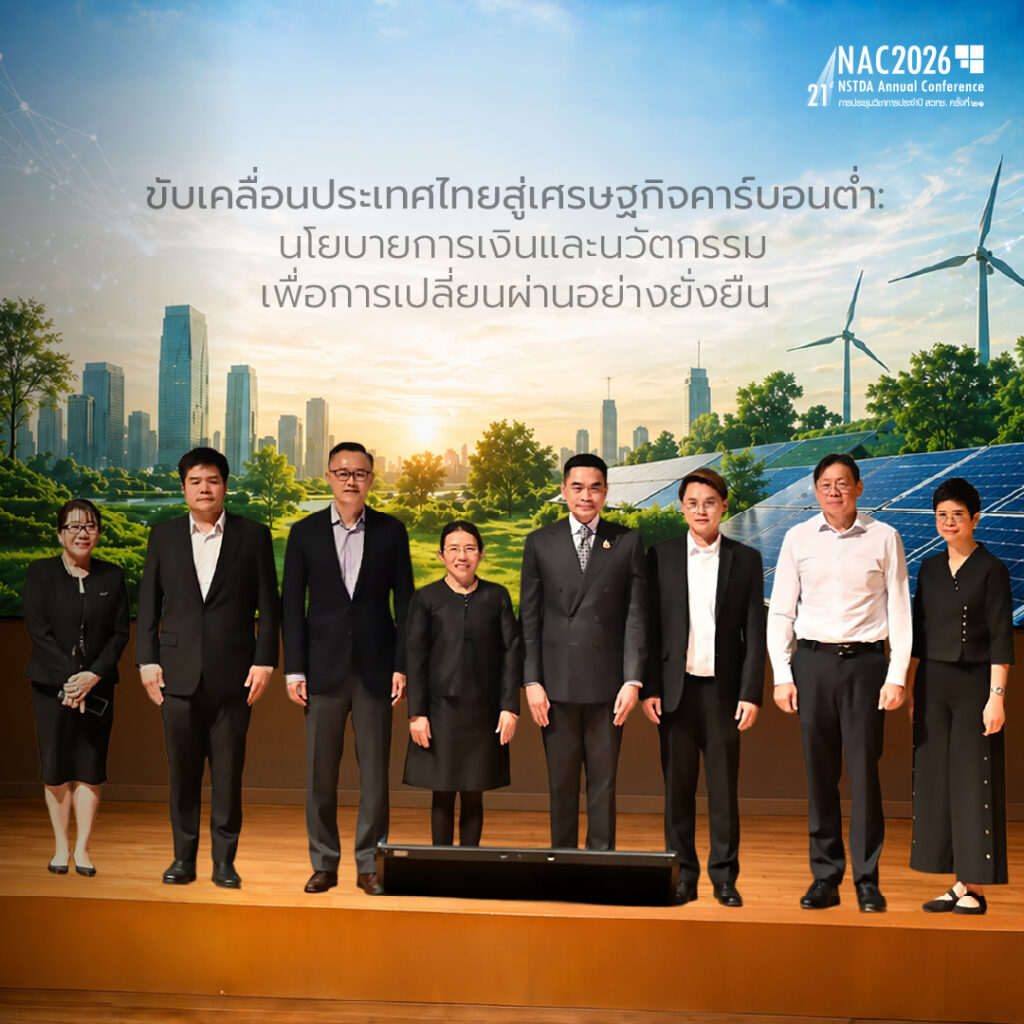
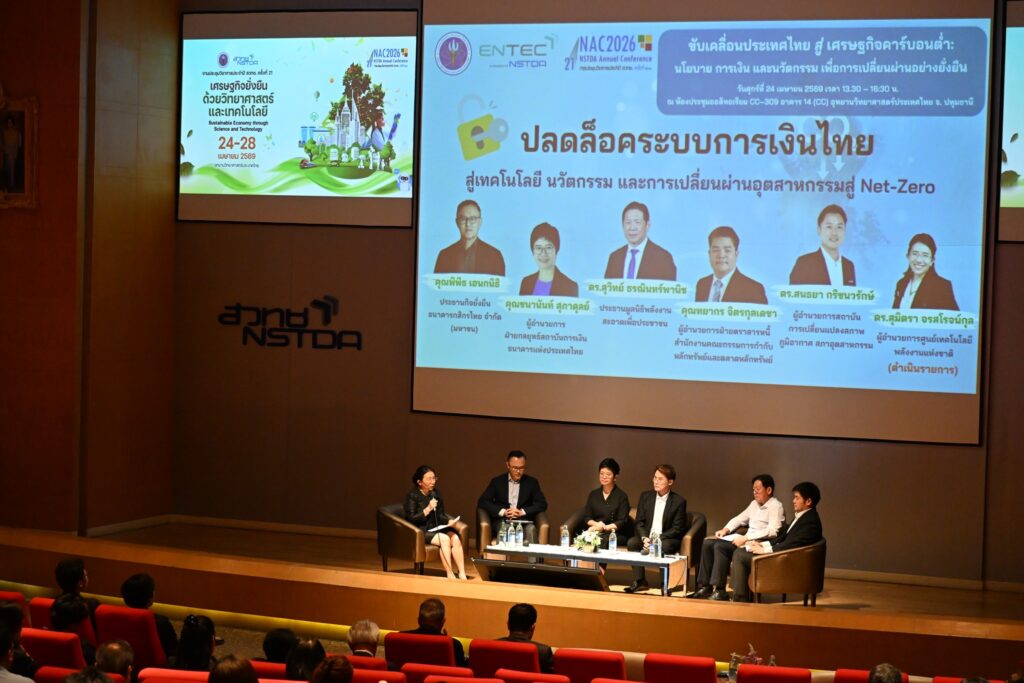
2026.04.24 ENTEC, NSTDA Hosts NAC2026 Seminar: ‘Driving Thailand Towards a Low-Carbon Economy: Financial Policies and Innovations for Sustainable Transition’
On April 24, 2026, at Thailand Science Park Convention Center in Pathum Thani
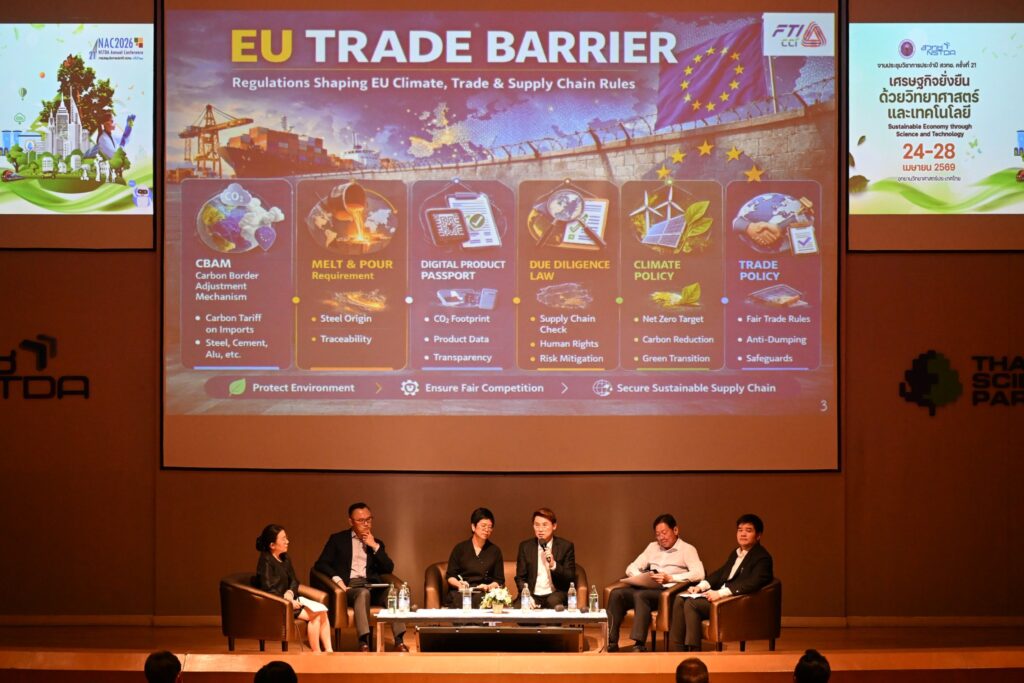
The National Energy Technology Center (ENTEC), under the National Science and Technology Development Agency (NSTDA) hosted a highlight seminar at the 21st NSTDA Annual Conference (NAC2026) titled “Driving Thailand Towards a Low-Carbon Economy: Financial Policies and Innovations for Sustainable Transition.” The forum convened leaders from the public, financial, and industrial sectors to address the urgent economic risks posed by the climate crisis and increasingly stringent global trade regulations.
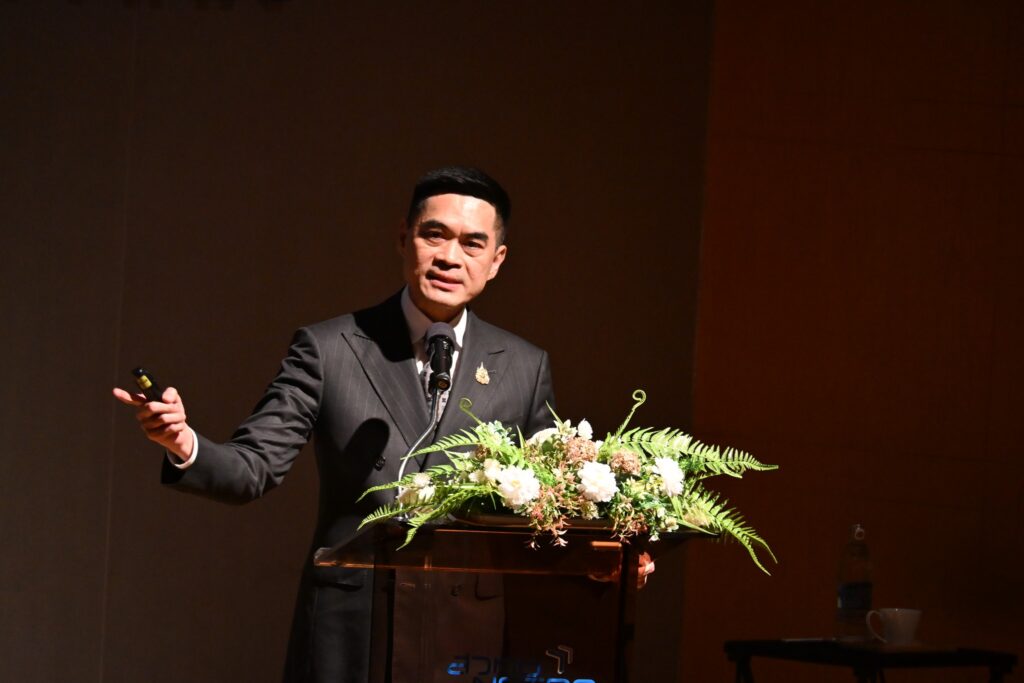
Dr. Phirun Saiyasitpanich, Director General, Department of Climate Change and Environment, opened the session with a stark assessment of Thailand’s climate vulnerability, currently ranked 17th out of 197 countries globally. He cautioned that a failure to invest in green infrastructure could result in a GDP contraction of 7–14% by 2050. Dr. Phirun emphasized that the proposed Climate Change Act should be viewed as an economic law designed to bolster long-term competitiveness through clear market mechanisms, such as carbon trading, to incentivize clean technology investment across vulnerable sectors.
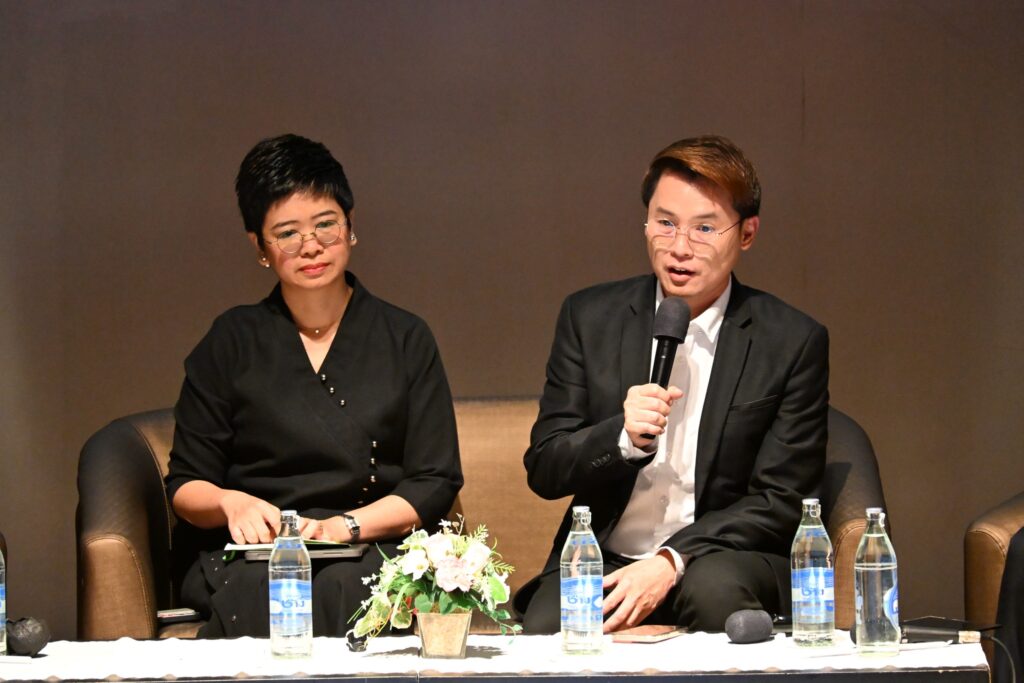
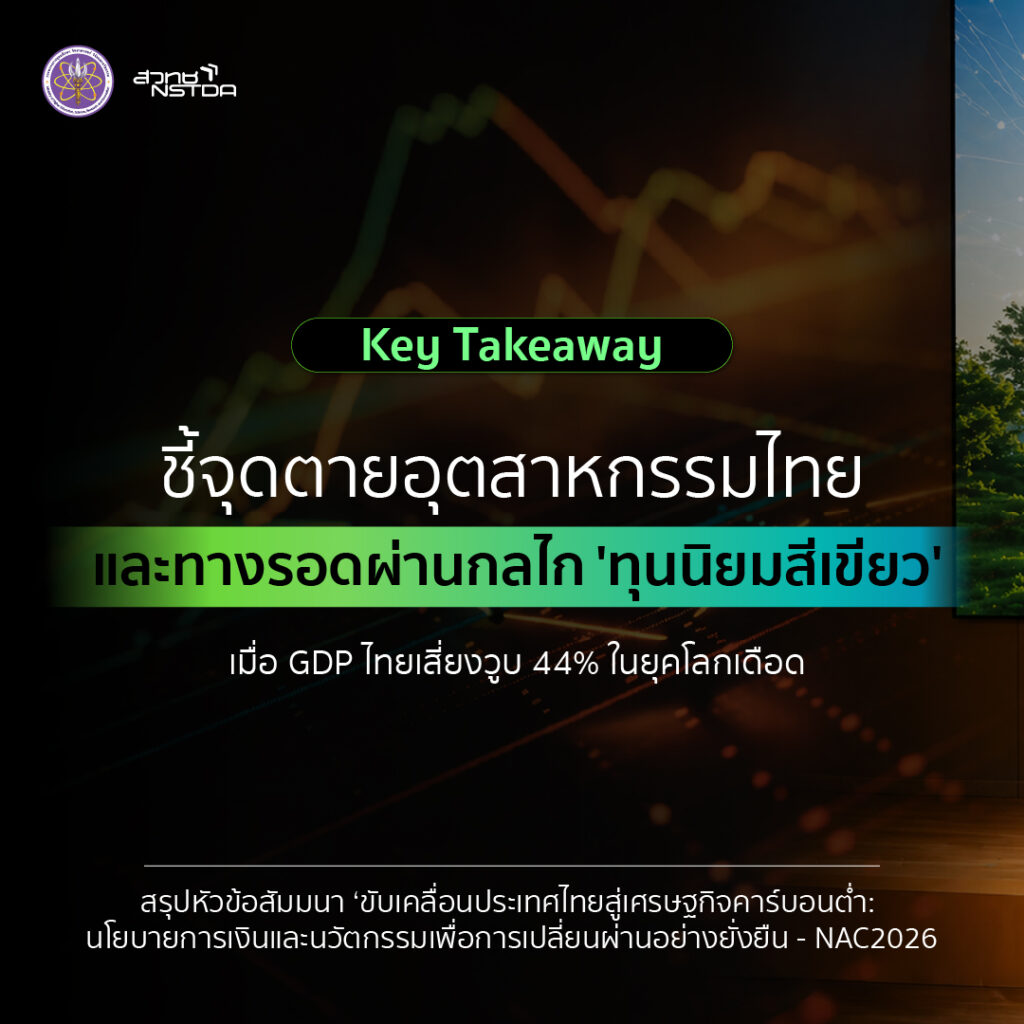
The financial implications of a warming world were further detailed by Mr. Pipit Aneaknithi, Chairman of Global Sustainability, Kasikornbank, who noted that if global temperatures rise by 3.2°C, the economic damage to Thailand could reach a staggering 44% of GDP. Addressing this requires an annual investment of approximately 360 billion THB. To meet this challenge, he proposed a “4x Multiplier” model, utilizing government funding as a catalyst to mobilize private capital. He also advocated for a shift in enterprise valuation models to include a “Green Premium,” allowing market forces to naturally prioritize sustainable businesses through asset and accounting frameworks.
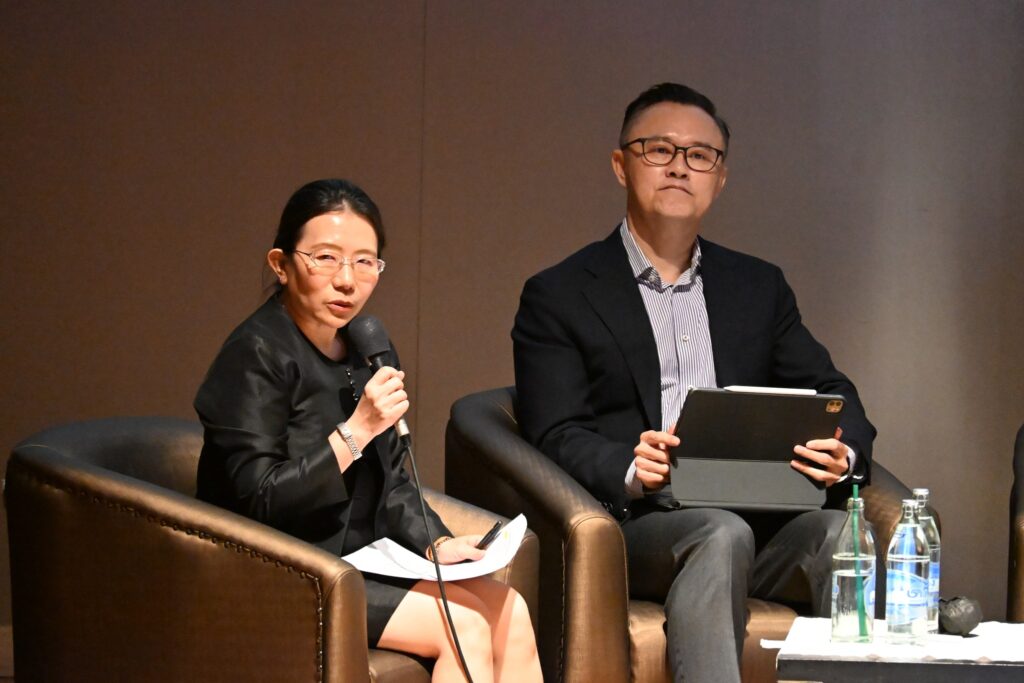
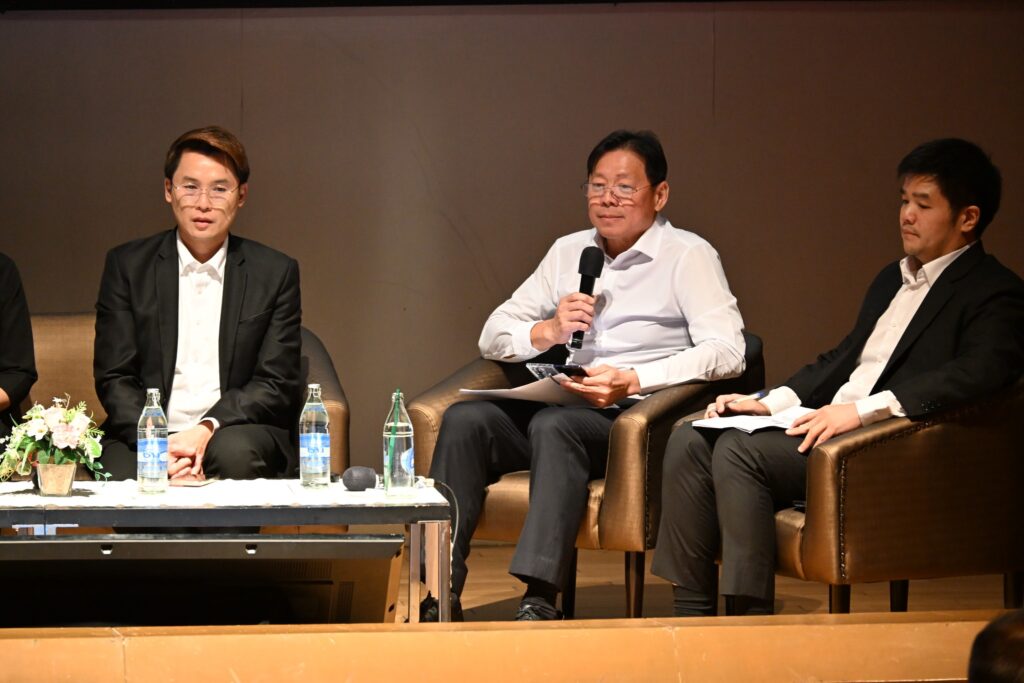
From an industrial perspective, the impact of international carbon policies is already being felt. Dr. Sontaya Krichnavaruk, Director of Climate Change Institute, the Federation of Thai Industries, highlighted the “Screw and Bolt Industry” as a recent case study where European orders were suspended due to concerns over the Carbon Border Adjustment Mechanism (CBAM), which could impose costs of up to 230 EUR per ton. Dr. Suvit Toraninpanich, Chairman, Clean Energy for Peoples Foundation, warned that Thailand risks losing over 2.3 trillion THB in market share to regional competitors like Vietnam if it does not urgently deregulate outdated laws, such as the “Factory License 4,” to allow for faster adoption of renewable energy. This urgency was echoed by Dr. Sumittra Charojrochkul, Executive Director of ENTEC, who moderated the discussion and noted that geopolitical tensions in the Middle East continue to drive up energy costs for Thai producers.
To ensure that small and medium-sized enterprises (SMEs) are not left behind, Ms. Chananun Supadulya from the Bank of Thailand introduced the “Thailand Taxonomy.” This framework acts as a central classification system for green activities, utilizing a traffic-light indicator to help banks identify and support businesses in transition, particularly those marked as “Yellow”, making it easier for them to access specialized financing. Meanwhile, Mr. Tayakorn Jitrakuldhacha, Bond Department Director, Securities and Exchange Commission, noted that ESG bond issuances have already surpassed 1.1 trillion THB, and announced that mandatory carbon data disclosure for listed companies will begin in 2028 to ensure transparency and prevent greenwashing.
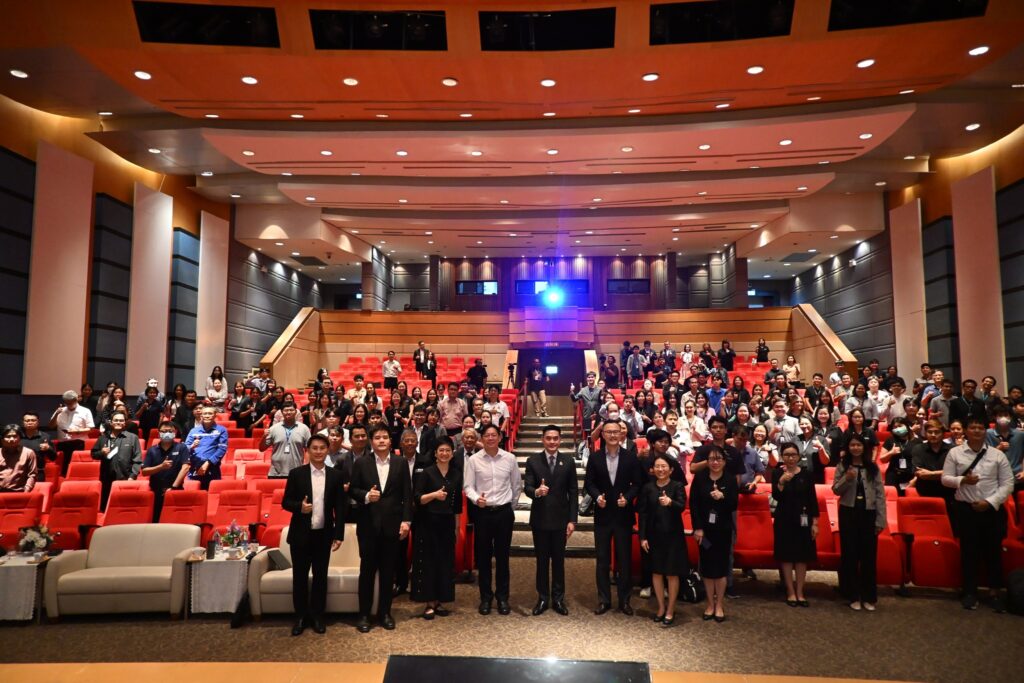
The seminar concluded with a shared consensus that transitioning to a low-carbon economy is no longer a matter of environmental choice but a fundamental requirement for national economic survival. By integrating flexible government policy with financial innovation and advanced technology, Thailand can turn these climate-related risks into new assets for long-term stability and sustainable growth.